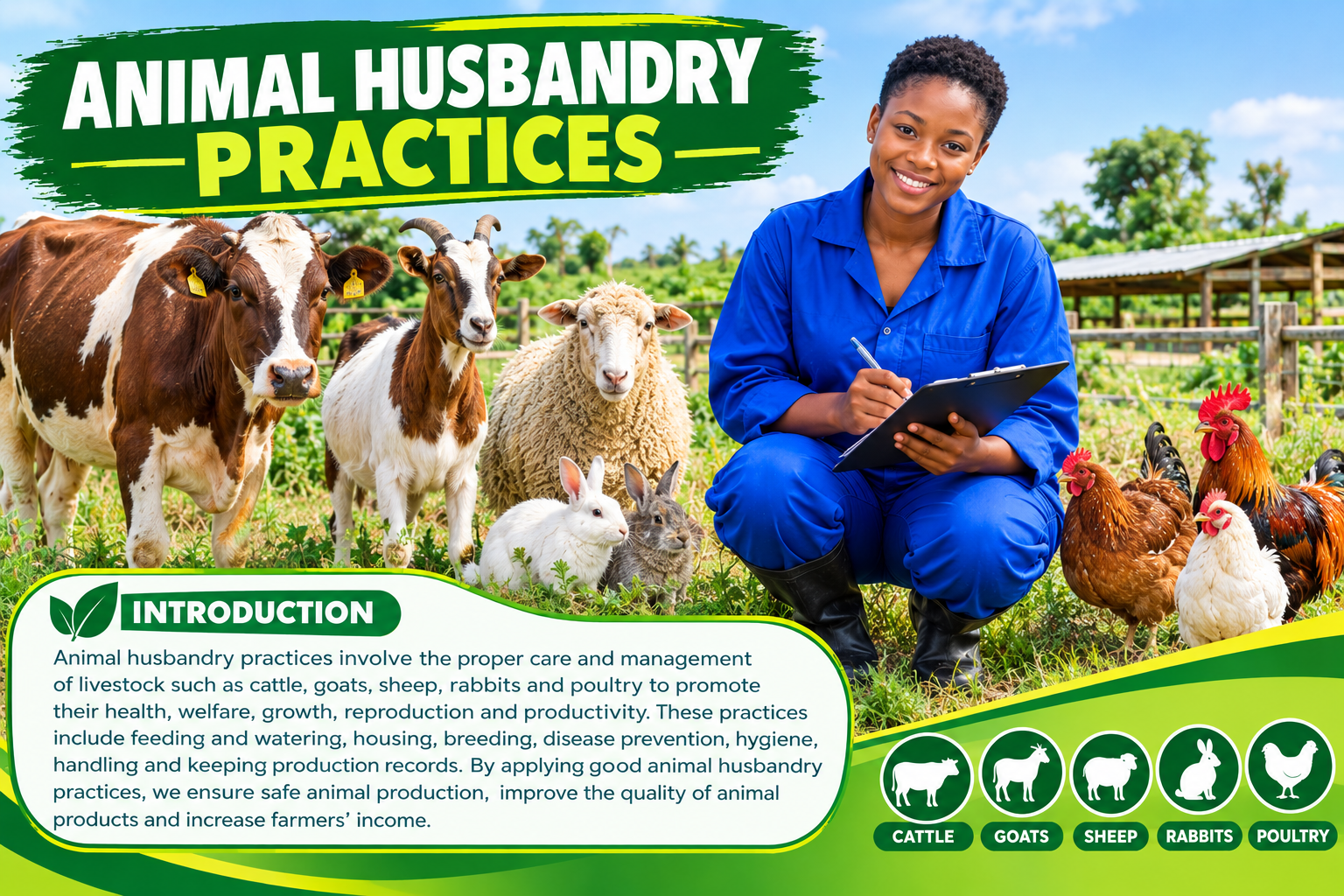
Animal husbandry practices involve the proper care and management of livestock to promote animal health, welfare, growth, reproduction, and productivity. These practices include feeding and watering, housing, breeding, disease prevention, hygiene, handling, and keeping livestock production records. They apply to different farm animals, including cattle, goats, sheep, rabbits, and poultry. A livestock technician plays an important role in applying these practices to ensure safe animal production, improve the quality of animal products, and increase farmers’ income. Through practical animal husbandry, learners develop the knowledge and skills needed to manage livestock efficiently and sustainably.
- Teacher: Patrick Ngabonziza
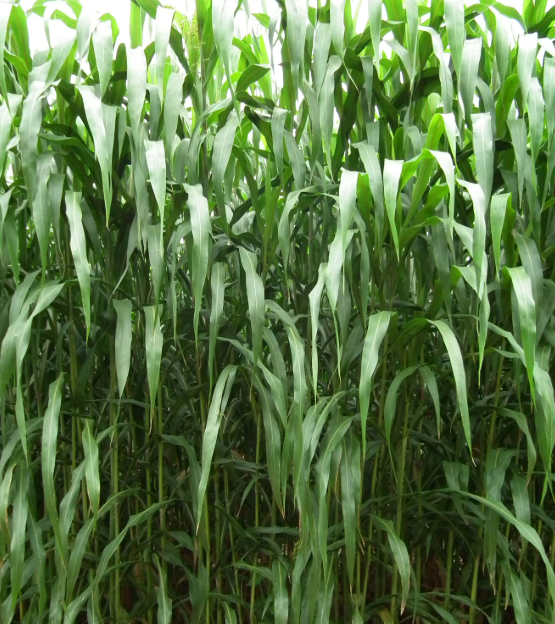
Forage crops cultivation in meeting roughage requirement of animal existence has an important role. Forage crops mainly consist of members of the Fabaceae (Leguminosae) and Poaceae (Gramineae). This module describes the skills and knowledge required to apply cropping and harvesting techniques applied to forage crops mainly grown in Rwanda. The module will allow the learner to prepare for planting activities, establish, and maintain and harvest forage crops. Learning units describe the essential outcomes of a competence. Performance criteria describe the required performance needed to demonstrate the achievement of the learning unit.
- Teacher: Dorothee Nyirangayabanshuka
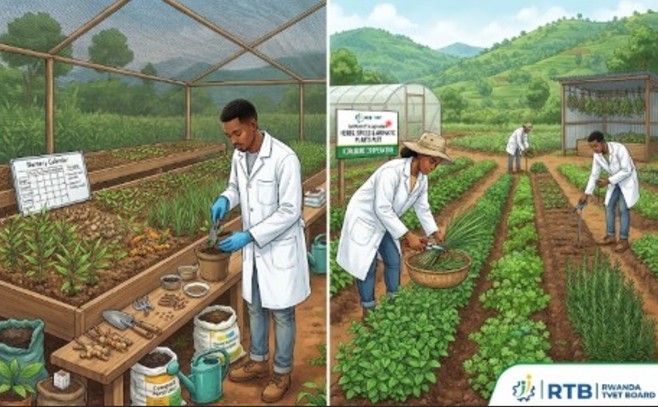
This module is intended for a trainee in TVET Certificate V, where trainee acquires skills, knowledge and attitudes required to grow herbs, spices and aromatic plants. It is intended for students who have successfully completed level IV in Agriculture and pursuing level V in Agriculture.
At the end of this module, students will be able to produce planting materials, establish herbs, spices and aromatic plants plantation, optimize growth and quality, perform harvesting and handle herb, spices and aromatic plants produce. Students deemed competent shall have the ability to take responsibility of carrying out of a range of defined activities in herbs, spices and aromatic plants growing under minimum supervision.
- Teacher: Rachel Mukahabanabakize
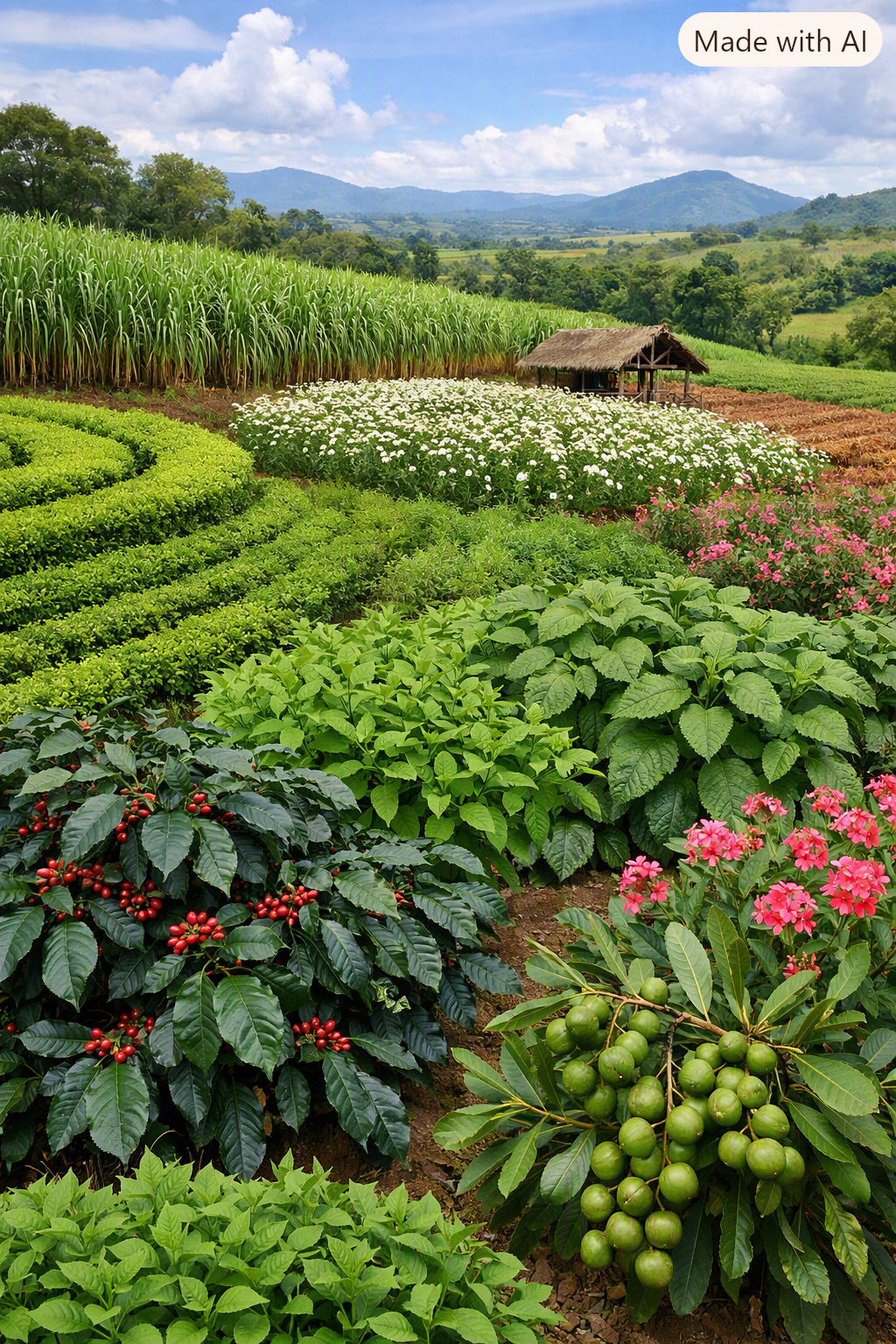
This module describes the knowledge, skills and attitudes required to grow industrial crops. It is intended for students who have successfully completed level IV in agriculture and pursuing level V in agriculture.
At the end of this module, students will be able to produce planting materials for industrial crops, establish industrial crop cultivation, optimize industrial crops growth and quality, harvest industrial crops and handle industrial crop produce.
- Teacher: Francoise Nyirabazirake
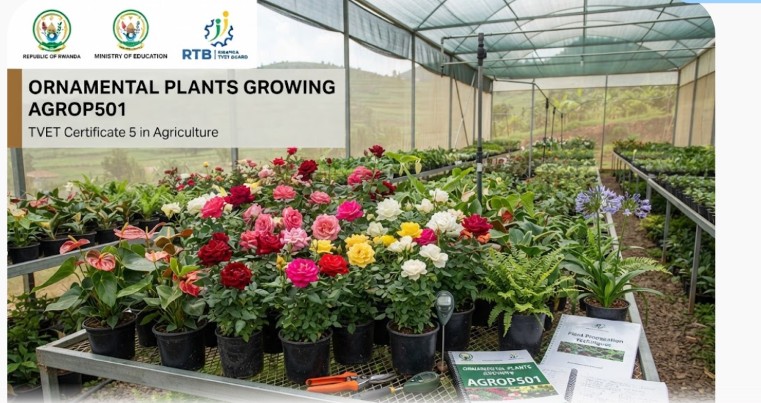
This module is intended for a trainee in TVET Certificate V, where trainee acquires skills, knowledge and attitudes required to grow ornamental plants. It is intended for students who have successfully completed level IV in Agriculture and pursuing level V in Agriculture.
At the end of this module, students will be able to produce planting materials for ornamental plants, establish ornamental plants, optimize ornamental plants growth and quality, harvest ornamental crops and handle ornamental crop produce. Students deemed competent shall have the ability to take responsibility of carrying out of a range of defined activities in ornamental plants growing under minimum supervision.
- Teacher: Rachel Mukahabanabakize
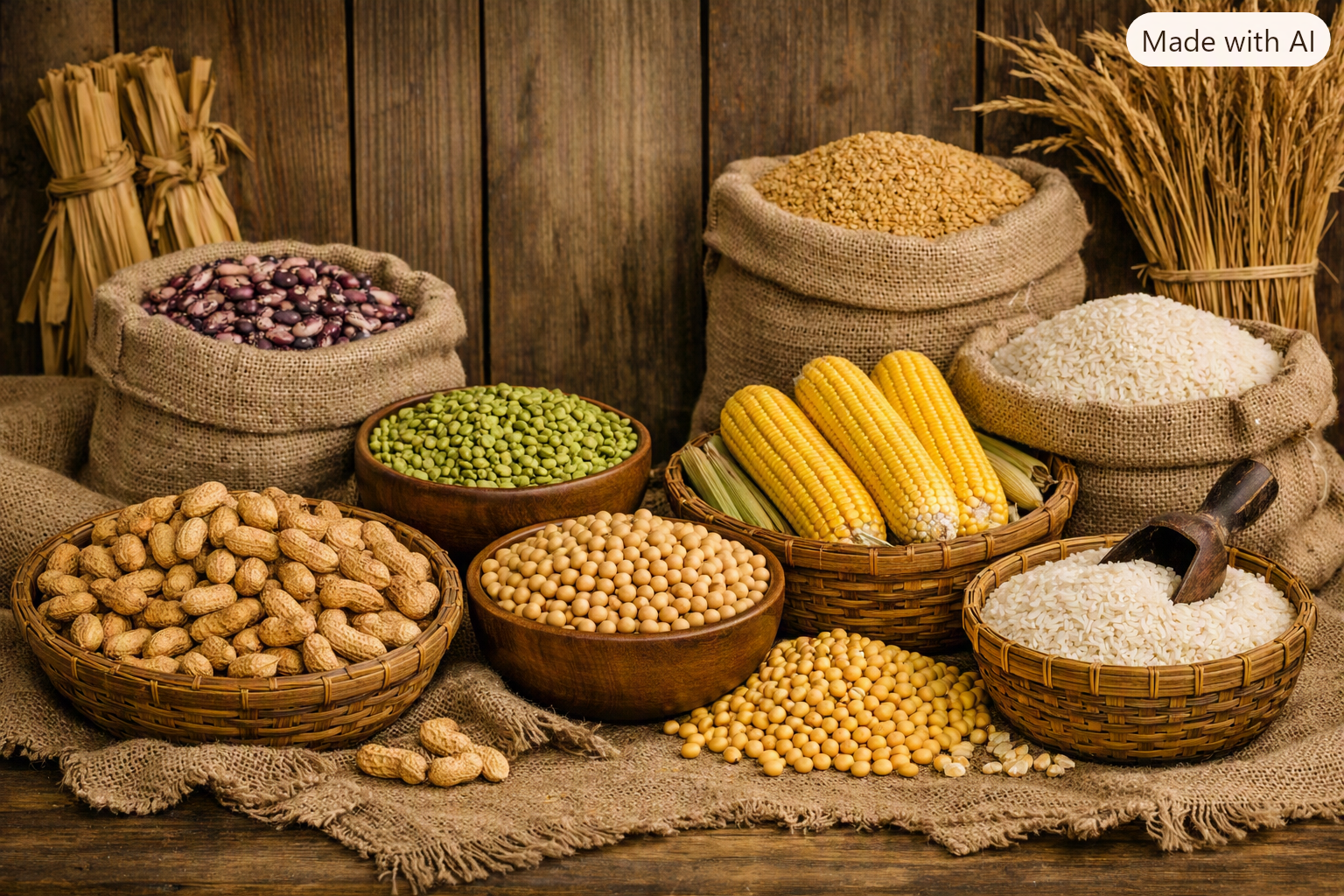
The Post Harvest and Handling Practices module teaches students how to manage crops properly after harvest to reduce waste and keep food fresh, prevents food loss, which often ruins a large share of farm yields, protects nutritional value and safety for consumers and increases income and market access for farmers.
- Teacher: Dorothee Nyirangayabanshuka
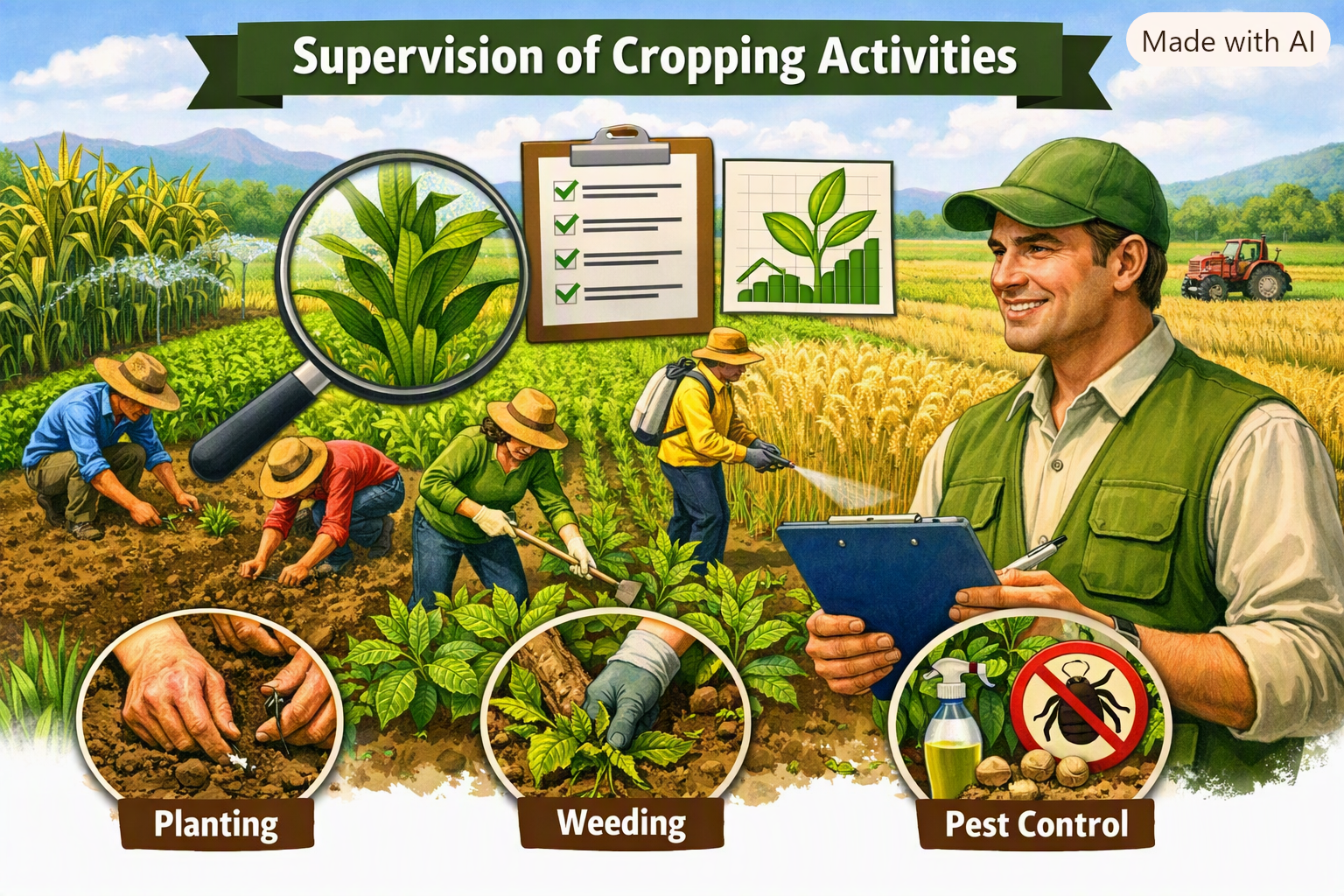
This module is intended for a trainee in Level 5 TVET, Certificate V in agriculture, where trainee acquires skills, knowledge and attitudes required to supervise crop establishment activities, crop maintenance activities and supervise in crop harvesting activities.
- Teacher: Francoise Nyirabazirake
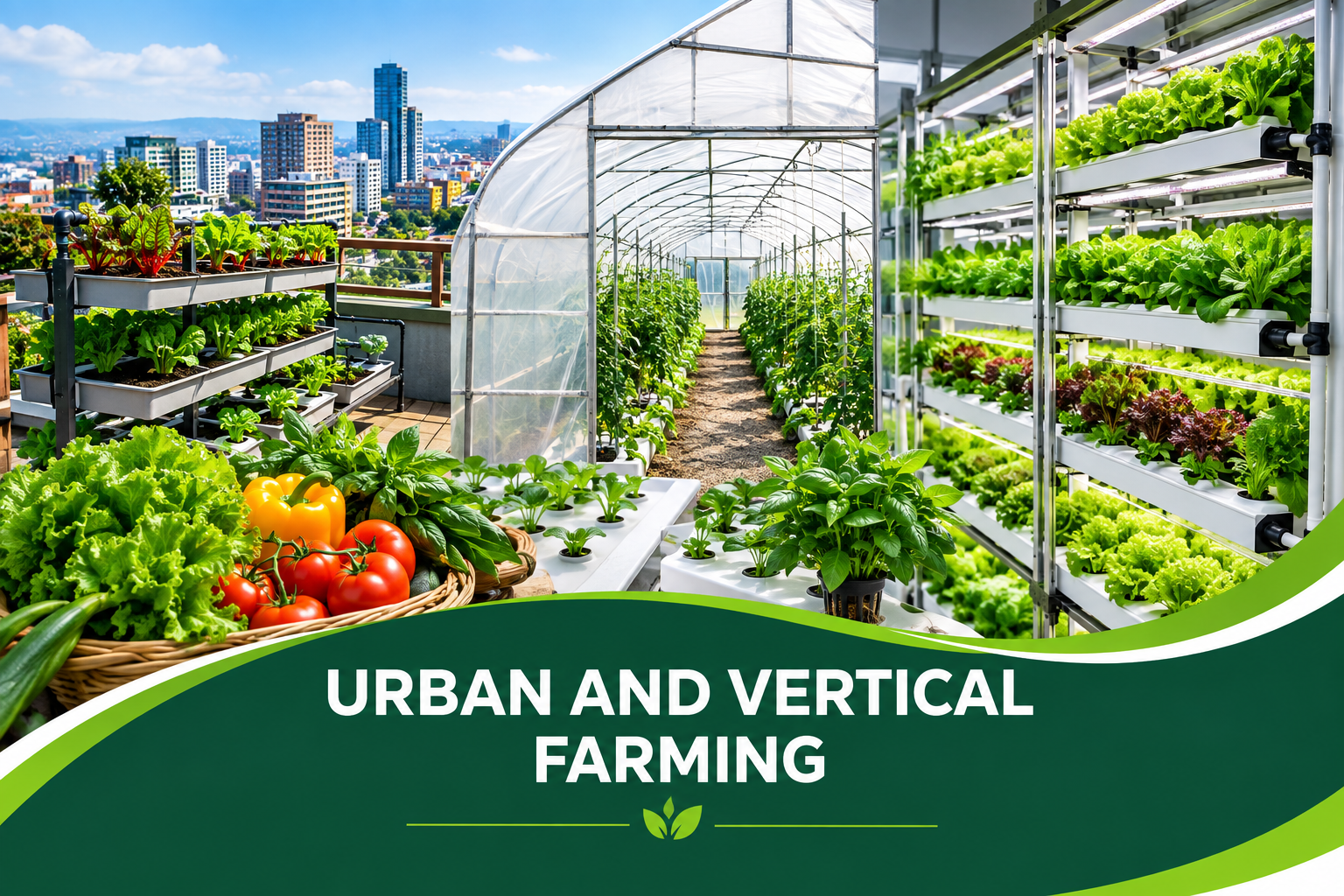
This module describes the knowledge, skills and attitudes required to perform urban and
vertical farming design simple urban and vertical farm structures. it is intended for
students who have successfully completed level IV in agriculture and pursuing level V in
agriculture .
At the end of this module, students will be able to design simple urban and vertical farm
structures, setup simple urban and vertical farm, grow crops in urban and vertical farms,
and maintain urban and vertical farms systems and infrastructures.
Students deemed competent shall have the ability to take responsibility of carrying out of
a range of defined activities in the urban and vertical farming under non- directive
supervision.
- Teacher: Rachel Mukahabanabakize