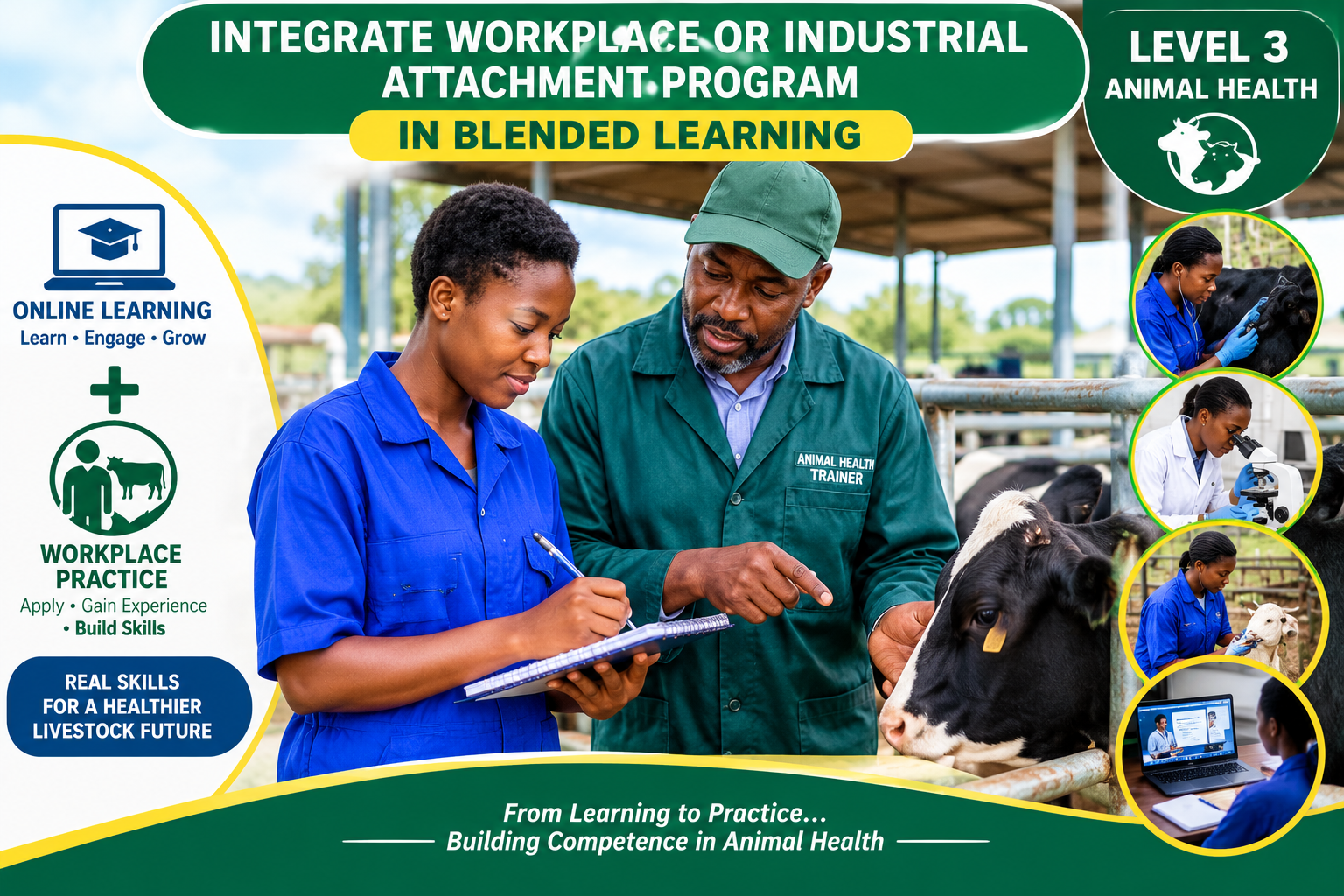
Course Title: INTEGRATED WORKPLACE OR INDUSTRIAL ATTACHMENT PROGRAM
Level: 3
Trade: ANIMAL HEALTH
Learning Mode: Blended Learning
The Integrated Workplace or Industrial Attachment Program for Level 3 Animal Health is designed to help learners develop basic practical skills and apply the knowledge acquired through classroom and online learning in real workplace environments. The program combines digital learning activities with supervised practical experience in veterinary clinics, livestock farms, animal health centers, and other institutions that provide animal health services.
During the workplace attachment, learners are introduced to essential animal health practices, including animal identification, safe animal handling and restraint, observation of animal behavior, identification of signs of illness, measurement of basic livestock health parameters, cleaning and disinfection of animal housing and equipment, and the application of biosecurity measures. Learners also become familiar with feeding and watering practices, animal welfare, basic disease prevention, and the maintenance of livestock health and production records under the guidance of qualified supervisors.
The blended learning approach allows learners to study theoretical concepts through online lessons, digital resources, assignments, and interactive learning activities before applying them in practical workplace situations. Trainers and workplace supervisors guide learners, demonstrate appropriate procedures, monitor their progress, provide feedback, and assess their performance according to the required learning outcomes.
Throughout the program, learners are expected to develop good communication skills, teamwork, discipline, responsibility, problem-solving abilities, and respect for workplace rules. They must also follow occupational health and safety procedures, use appropriate personal protective equipment (PPE), protect animal welfare, and seek guidance from qualified animal health professionals whenever a task exceeds their level of competence.
At the end of the program, learners should be able to perform assigned basic animal health tasks safely and responsibly under appropriate supervision, recognize common signs of animal illness, assist with routine livestock management activities, and communicate relevant observations to their supervisors.
Ultimately, the program prepares Level 3 Animal Health learners for further vocational training and entry-level workplace responsibilities by building their confidence, practical competence, professional behavior, and understanding of real-world animal health services.
- Teacher: Patrick Ngabonziza