Category: Practice On Blended Learning
RTB eLearning
Search results: 798

This module Describes the skills, Knowledge and attitude required to Perform basics of Networking. This module intended to prepare students Pursuing TVET in Level 4 Software Development. At the end of this module, the students will be able to Establish network media connectivity, Perform Basic Network Configuration, Maintain Network system
- Teacher: KWIZERA INGABIRE DIANE
Category: L4 SOFTWARE DEVELOPMENT

This module includes all the knowledge and skills required in software
development specifically for the module of "Basics of Networking". Trainees enrolled in
this module will engage in practical activities designed to develop and enhance their
competencies. The development of this training manual followed the Competency
Based Training and Assessment (CBT/A) approach, offering ample practical
opportunities that mirror real-life situations.
- Teacher: Marie Chantal MASENGESHO
Category: L4 SOFTWARE DEVELOPMENT
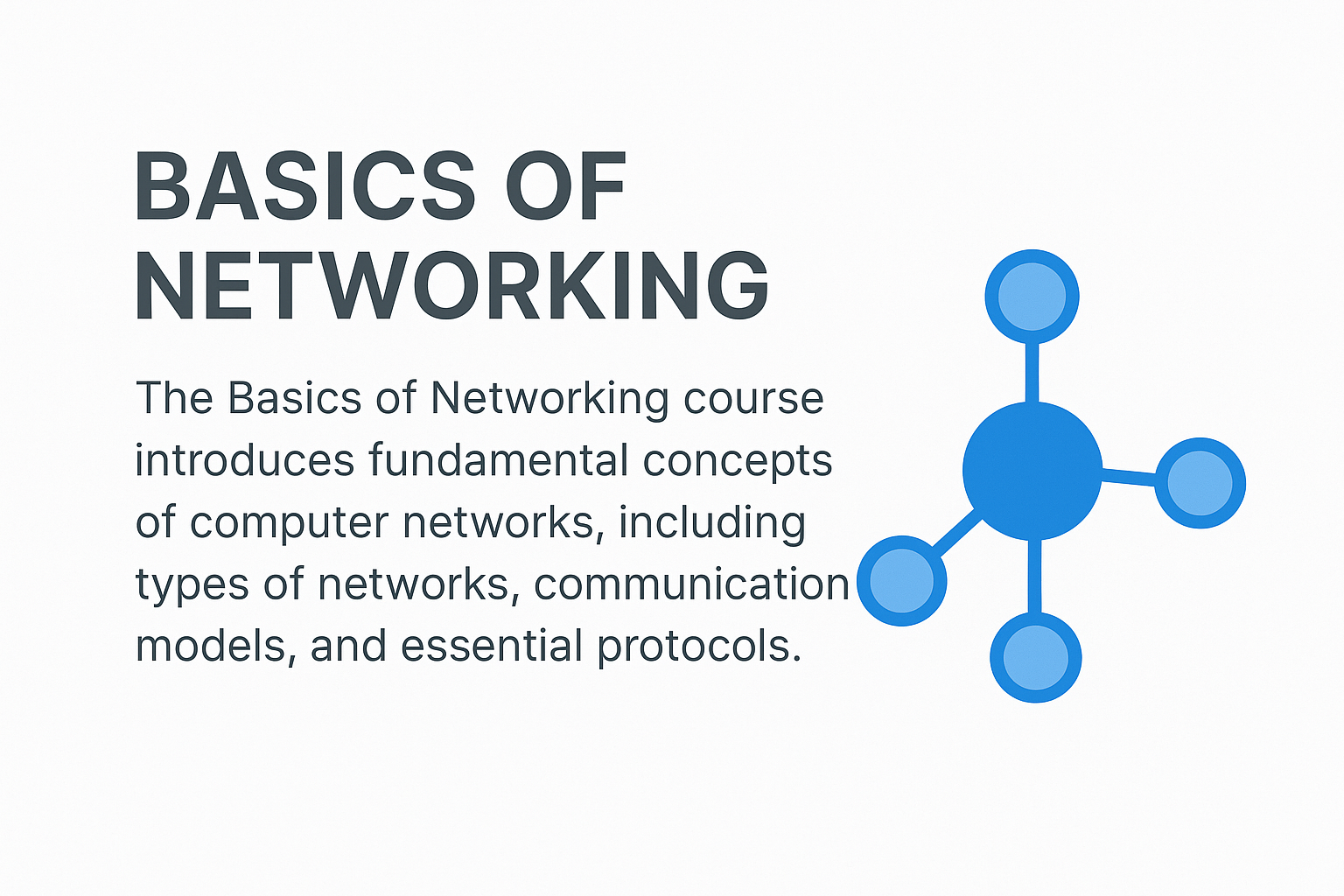
The Basics of Networking course introduces fundamental concepts of computer networks, including types of networks, communication models, and essential protocols. Students learn about networking devices, media, and topologies, alongside IP addressing and basic configuration principles. The course emphasizes understanding how data is transmitted, shared, and secured across networks. By the end, learners gain practical knowledge to design simple networks and apply networking concepts in software development environments.
- Teacher: UWIZEYIMANA Isaie
- Teacher: JEANMARIEVIANNEY NSENGIYUMVA
- Teacher: EMMANUEL NZARUBARA
Category: Practice On Blended Learning


"Technical Drawing is a subject that teaches how to represent objects and ideas clearly and accurately using drawings."
- Teacher: JeanDamascene BIMENYIMANA
- Teacher: |GIRINSHUTI Fabrice
- Teacher: GASPARD HARERIMANA
- Teacher: Paulin NIYIGABA
- Teacher: Wilson NIYONKURU
Category: Practice On Blended Learning

This module introduces the foundational principles and elements essential to creating effective and visually appealing designs. It covers both theoretical concepts and practical applications.
- Teacher: Marie Chantal MASENGESHO
Category: L3 SOFTWARE DEVELOPMENT

Graphic design is the art and practice of creating visual content to communicate messages. It combines images, text, colors, and layout techniques to convey ideas in a clear, engaging, and aesthetically pleasing way.
- Teacher: Clementine DUSABE
Category: L3 SOFTWARE DEVLOPMENT

This module describes the skills, knowledge and attitude required to
Apply Network Fundamentals. This module is intended to prepare students
pursuing TVET Level 3 in Networking and Internet Technologies. At the end of
this module, students will be able to Identify network concepts, apply network
protocols and communications and Apply IP addressing (IPv4&IPv6).
- Teacher: Origene IGIRANEZA
Category: Interactive content

This specific module describes the skills, knowledge and attitude required to Apply Python Programming. This module is intended to prepare learners pursuing TVET Level 5 in software development. Upon completion of this module, the learner will be able to Prepare python environment, write basic python program and Apply object-driven in python.
- Teacher: Emmanuel SIBOMANA
Category: L5 SOFTWARE DEVELOPMENT
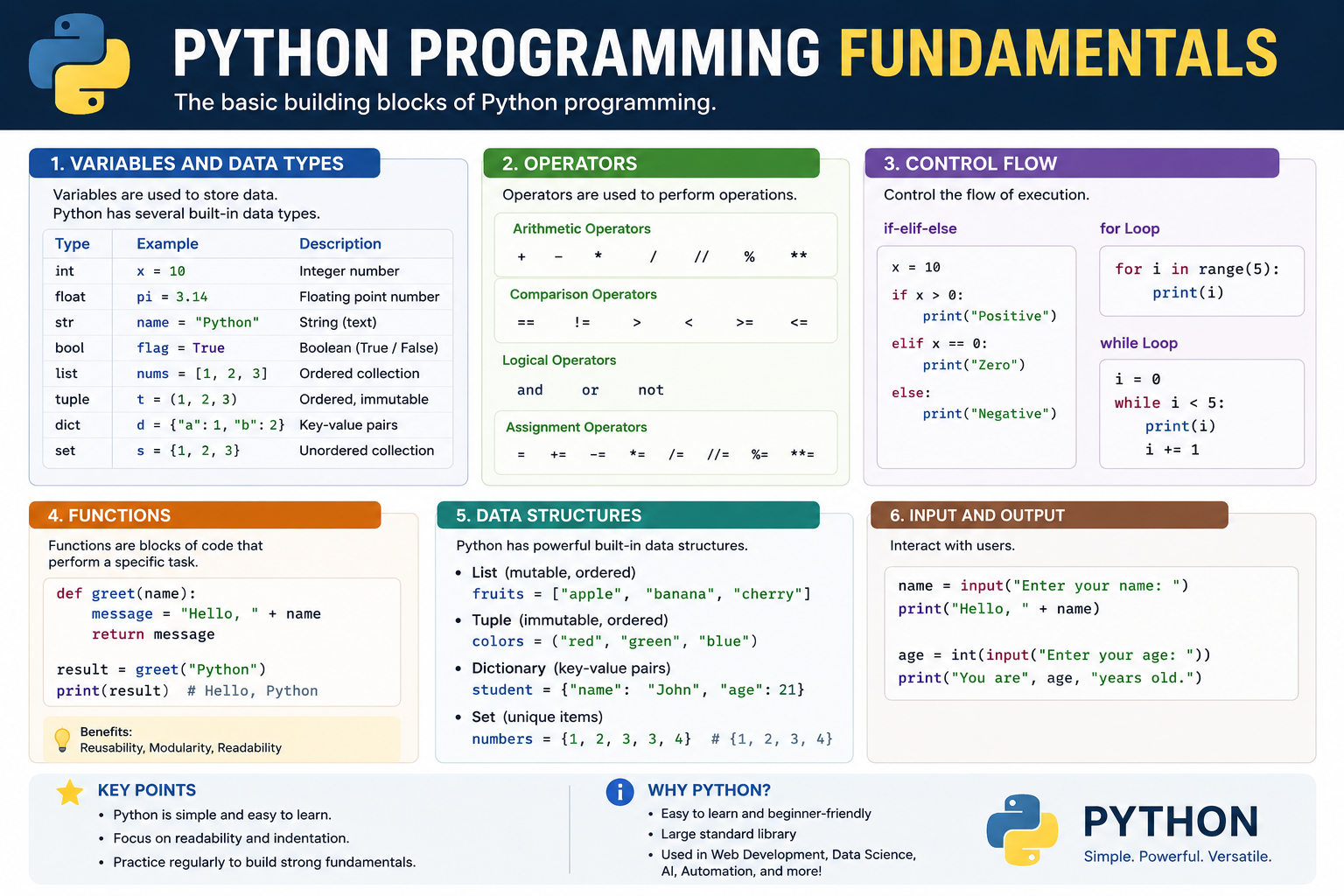
Python Programming Fundamentals are the basic concepts and skills needed to understand and write programs using the Python programming language. Python is a simple, powerful, and beginner-friendly language widely used in web development, data science, automation, artificial intelligence, and software development.
- Teacher: Clementine DUSABE
Category: L5 SOFTWARE DEVELOPMENT

This module is a critical component of any system, project, or organizational process aimed at ensuring the delivery of high-quality products and services. Its primary goal is to establish, monitor and maintain standards that lead to consistent and reliable outputs while minimizing errors, defects, and inefficiencies.
- Teacher: Marie Chantal MASENGESHO
Category: L5 SOFTWARE DEVELOPMENT

This module describes the skills, knowledge and attitude required to carry out hatchery operations.
A hatchery is a facility where eggs are hatched under artificial conditions, especially those of fish, poultry.
The hatchery is a special building with controlled ventilation .it contains machines for holding and incubating large numbers of eggs . the hatchery is designed with hygiene in mind and is laid out so there is little chance of any contaminating organisms traveling back from hatched chicks to eggs brought in later.
- Teacher: Basamiraho Emmanuel
Category: L4 ANIMAL HEALTH

A course on hatchery operations provides a comprehensive overview of the process of producing high-quality poultry or fish from eggs. The curriculum typically covers the entire lifecycle, from the selection and management of parent stock to the handling of newly hatched animals. The goal is to equip students with the knowledge and practical skills needed to optimize production, ensure animal health, and run an efficient and profitable hatchery.
- Teacher: Jean Pierre RURANGIRWA
Category: L4 ANIMAL HEALTH
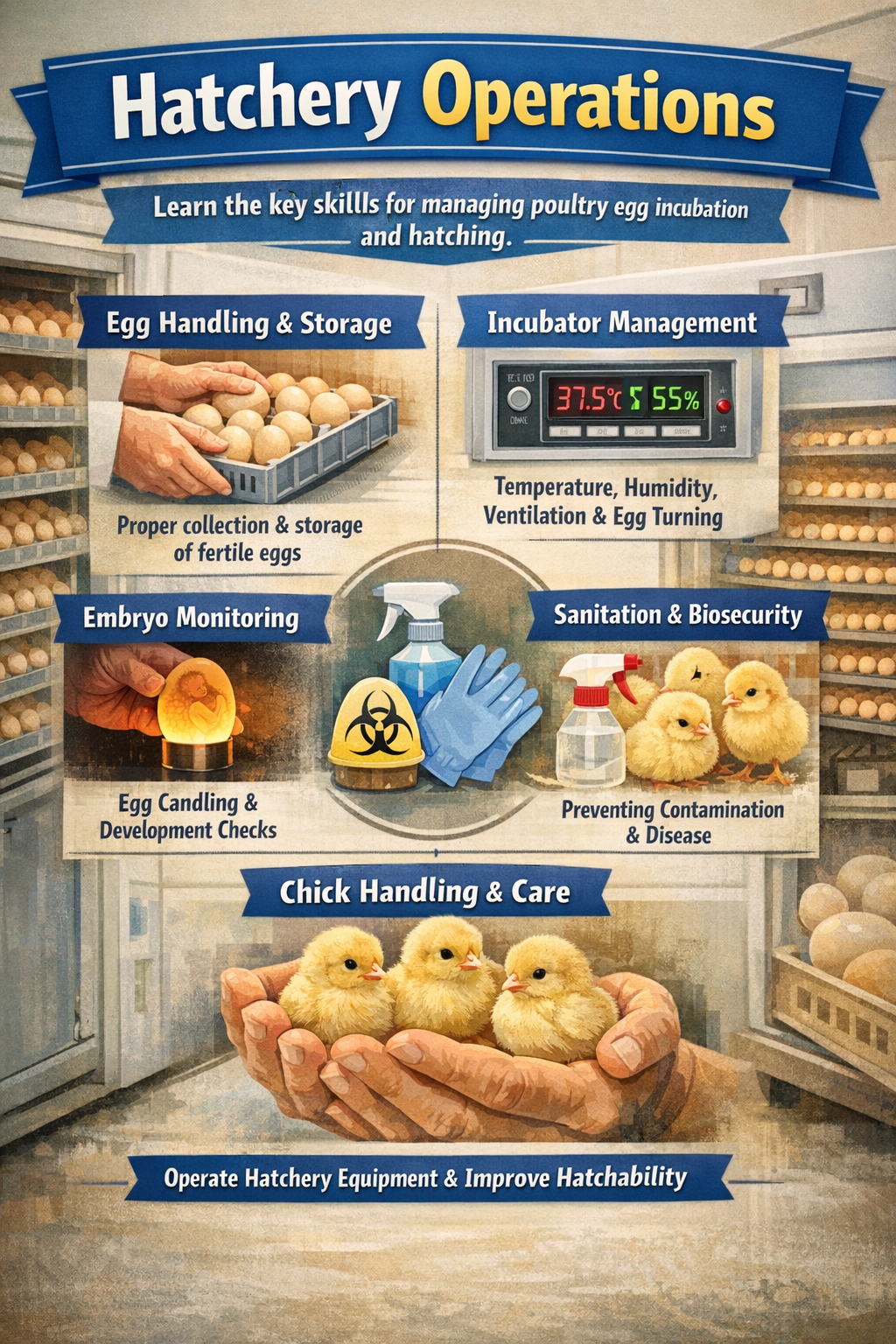
The Hatchery Operations module provides learners with the knowledge and practical skills required to manage the incubation and hatching of poultry eggs in a hatchery environment. The module focuses on the correct handling and storage of fertile eggs, proper preparation and operation of incubators, and maintaining suitable conditions such as temperature, humidity, ventilation, and egg turning to ensure high hatchability. It also covers key management practices including egg candling, embryo development monitoring, sanitation and biosecurity measures, and chick handling after hatching. By the end of the module, learners will be able to operate hatchery equipment effectively, prevent contamination and disease spread, and produce healthy, high-quality chicks for poultry production.
- Teacher: NIYONZIMA Fiston
Category: L4 Animal Health