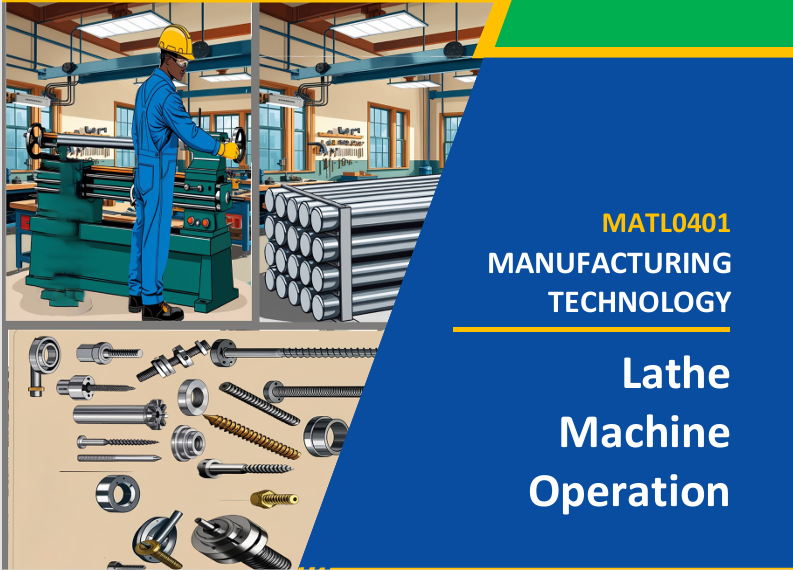
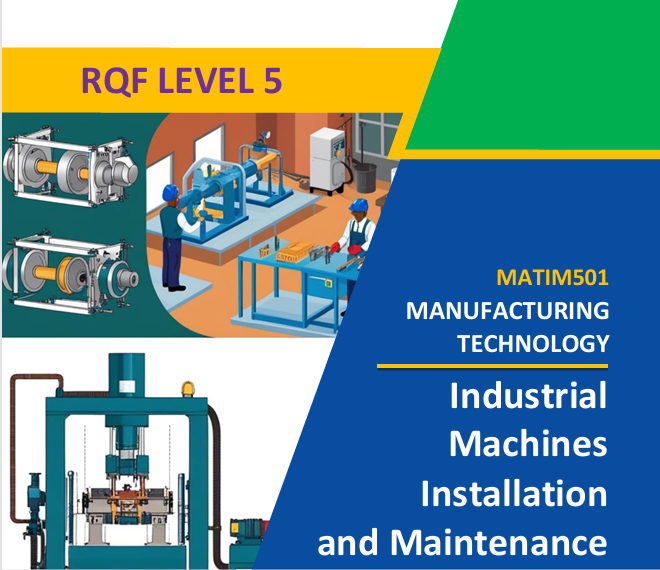
In this module of Lathe Machine Operation, we will deal with the essential skills and knowledge required to operate a lathe machine effectively and safely. The module is divided into three key learning outcomes: preparing the workplace, carrying out turning operations, and completing finishing activities. Learners will explore topics such as organizing the workspace, selecting appropriate tools and materials, performing machining tasks, and applying proper safety and cleaning procedures. Each section includes hands-on activities and assessments to develop practical, job ready competencies. Overall, this module prepares trainees for real-world lathe operations with a strong focus on precision, efficiency, and workplace safety.
Search results: 347
JavaScript is a lightweight, flexible programming language that plays a central role in making web pages interactive. While it was originally designed to run only in browsers, today it also powers servers through platforms like Node.js.
At its core, JavaScript relies on variables to store and manage data. Developers can declare variables using var, let, or const. Of these, let and const are modern, block-scoped keywords, with const being used for values that should not be reassigned.
The language works with different data types, divided into two categories: primitives and reference types. Primitive values include strings, numbers, booleans, null, undefined, symbols, and big integers. Reference types, on the other hand, cover objects, arrays, and functions.
To manipulate data, JavaScript provides operators. These range from arithmetic operators for calculations, to comparison and logical operators for decision-making. Combining these with control flow structures, such as if...else statements and loops like for or while, allows developers to write logic that adapts to different situations.
Functions are another cornerstone of JavaScript. They let you group code into reusable blocks, which can be defined traditionally with the function keyword or in newer, more concise forms like arrow functions. Alongside this, objects and arrays make it possible to organize data: objects store information as key–value pairs, while arrays hold ordered lists of values.
One of JavaScript’s most powerful features is its ability to interact with the Document Object Model (DOM). Through the DOM, developers can dynamically update a webpage—changing text, styles, or structure in response to events. Events, such as a user clicking a button or pressing a key, can be captured and handled through event listeners, making websites more interactive and engaging.
In recent years, JavaScript has grown even more powerful thanks to modern ES6+ features. These include template literals for easier string formatting, destructuring for extracting values from objects or arrays, and the spread/rest operators for handling collections of data. JavaScript also supports modules, enabling code to be imported and exported across files, and provides asynchronous programming tools such as promises and async/await, which are essential for working with tasks like API calls or file operations.
The module discuss on variables, data types, operators, control flow, functions, objects, arrays, DOM manipulation, events, and modern ES6 feature used for the building blocks of interactive web development.

- Teacher: NDAGIJIMANA Silas
A lathe machine is a fundamental tool used in manufacturing and metalworking to shape, cut, and finish materials such as metal, wood, or plastic. It works by rotating the workpiece against a cutting tool, allowing operations like turning, facing, threading, drilling, and knurling.
The lathe machine is widely used because it provides accuracy, efficiency, and versatility in producing cylindrical or symmetrical components. In this course, learners will understand the parts of a lathe machine, safe operating procedures, and practical applications in producing precise components.
In this module of Lathe Machine Operation, we will deal with the essential skills and knowledge required to operate a lathe machine effectively and safely. The module is divided into three key learning outcomes: preparing the workplace, carrying out turning operations, and completing finishing activities. Learners will explore topics such as organizing the workspace, selecting appropriate tools and materials, performing machining tasks, and applying proper safety and cleaning procedures. Each section includes hands-on activities and assessments to develop practical, job ready competencies. Overall, this module prepares trainees for real-world lathe operations with a strong focus on precision, efficiency, and workplace safety.

- Teacher: |GIRINSHUTI Fabrice
This module describes employable and practicable skills, knowledge and right attitudes required by the learner to prepare the workplace for lathe machine operation, carry out turning the product and carry out finishing activities for operating lathe machine. The contents provided in this course are package reserved for a learner pursuing TVET certificate IV in Manufacturing Technology. Graduates at this level will have knowledge and skills for finishing works, community involvement and further leaning
- Teacher: PHILIBERT GIRANEZA
The course on Lathe Machine Operations introduces learners to the fundamental principles, components, and working of a lathe machine, one of the most versatile machine tools in manufacturing. The course emphasizes both theoretical knowledge and practical skills required for safe and efficient machining operations.
- Teacher: GASPARD HARERIMANA
The purpose of the module is to equip learners with the skills, knowledge, and attitude required to apply livestock extension techniques
Upon completion, learners will be able to assess farmers' needs, develop and deliver customized extension plans, and monitor and evaluate the impact of their services with minimal supervision
The course content covers effective farmer engagement, communication, and demonstration of livestock management techniques, emphasizing adaptability, respect for local practices, and a commitment to continuous learning to improve livestock farming
- Teacher: ALEXIE MUMUKUNDE
This module describes the skills, knowledge and attitude required to apply livestock extension techniques.
It is intended to the learners pursuing TVET Certificate IV in Animal health. Upon completion of this module the learner will be able to assess Farmers' Needs, develop Extension plans, deliver extension services, monitor and evaluate Impact under minimum supervision.

- Teacher: Rene Heritier UWURUKUNDO
This module describes the skills, knowledge and attitude required to apply livestock extension techniques. It is intended to the learners pursuing TVET Certificate IV in Animal health. Upon completion of this module the learner will be able to assess Farmers' Needs, develop Extension plans, deliver extension services, monitor and evaluate Impact under minimum supervision

- Teacher: Patrick NGABONZIZA
This module describes the skills, knowledge and attitude required to
apply livestock extension techniques. It is intended to the learners pursuing
TVET Certificate IV in Animal health. Upon completion of this module the
learner will be able to assess Farmers' Needs, develop Extension plans, deliver
extension services, monitor and evaluate Impact under minimum supervision

This course equips trainees with practical knowledge and skills to perform effective preventive maintenance on industrial machines. Learners gain competence in preparing for maintenance work, maintaining machines, and completing post-maintenance activities. By the end of the course, trainees will be able to maintain machines safely, efficiently, and professionally, ensuring smooth operation and minimizing breakdowns in manufacturing environments.

- Teacher: RAISSA IRADUKUNDA
Machine Preventive Maintenance is a proactive approach focused on ensuring that machines and equipment remain in optimal working condition. It involves regularly scheduled activities intended to prevent equipment failures and maintain operational efficiency.

Machine Preventive Maintenance is a proactive approach focused on ensuring that machines and equipment remain in optimal working condition. It involves regularly scheduled activities intended to prevent equipment failures and maintain operational efficiency.

- Teacher: |GIRINSHUTI Fabrice
Machine Preventive Maintenance is a proactive approach focused on ensuring that machines and equipment remain in optimal working condition. It involves regularly scheduled activities intended to prevent equipment failures and maintain operational efficiency.

- Teacher: GASPARD HARERIMANA
- Teacher: NIYITEGEKA Jean Damascene
- Teacher: Pascal NDAYISHIMIYE
- Teacher: Paulin NIYIGABA
- Teacher: NIYITEGEKA Patrick
- Teacher: RAISSA IRADUKUNDA
Machine Preventive Maintenance is a proactive approach focused on
ensuring that machines and equipment remain in optimal working condition. It
involves regularly scheduled activities intended to prevent equipment failures
and maintain operational efficiency.

- Teacher: JeanDamascene BIMENYIMANA
- Teacher: |GIRINSHUTI Fabrice
- Teacher: OLIVIER MPARIBATENDA
- Teacher: Paulin NIYIGABA
- Teacher: Wilson NIYONKURU