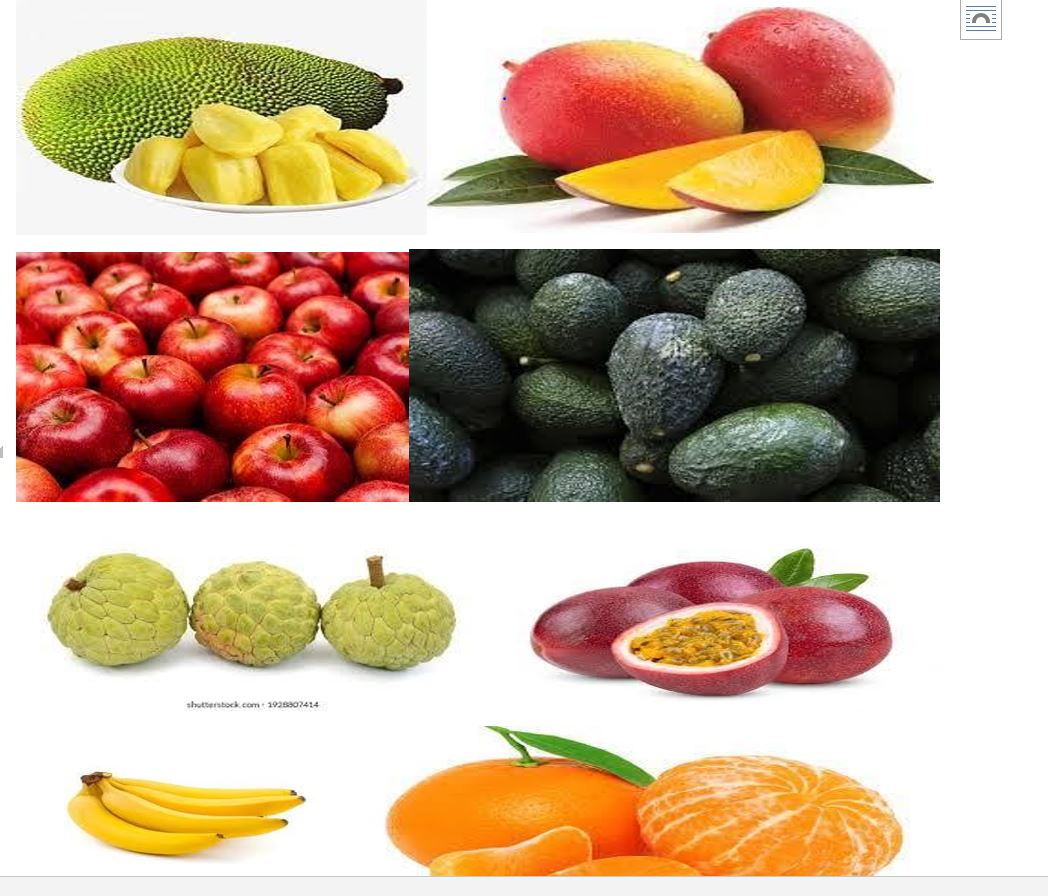
This module describes the skills, knowledge and attitude required to grow fruits.
It is designed for learners who have successfully completed TVET Certificate III in
Agriculture or its equivalent and pursuing TVET Certificate IV in Agriculture or any
other related qualifications. At the end of this module, learners will be able to
select the site for fruits growing, conduct fruits plantation, and handle harvested
produce of fruits.
- Teacher: Speciose Uwimana
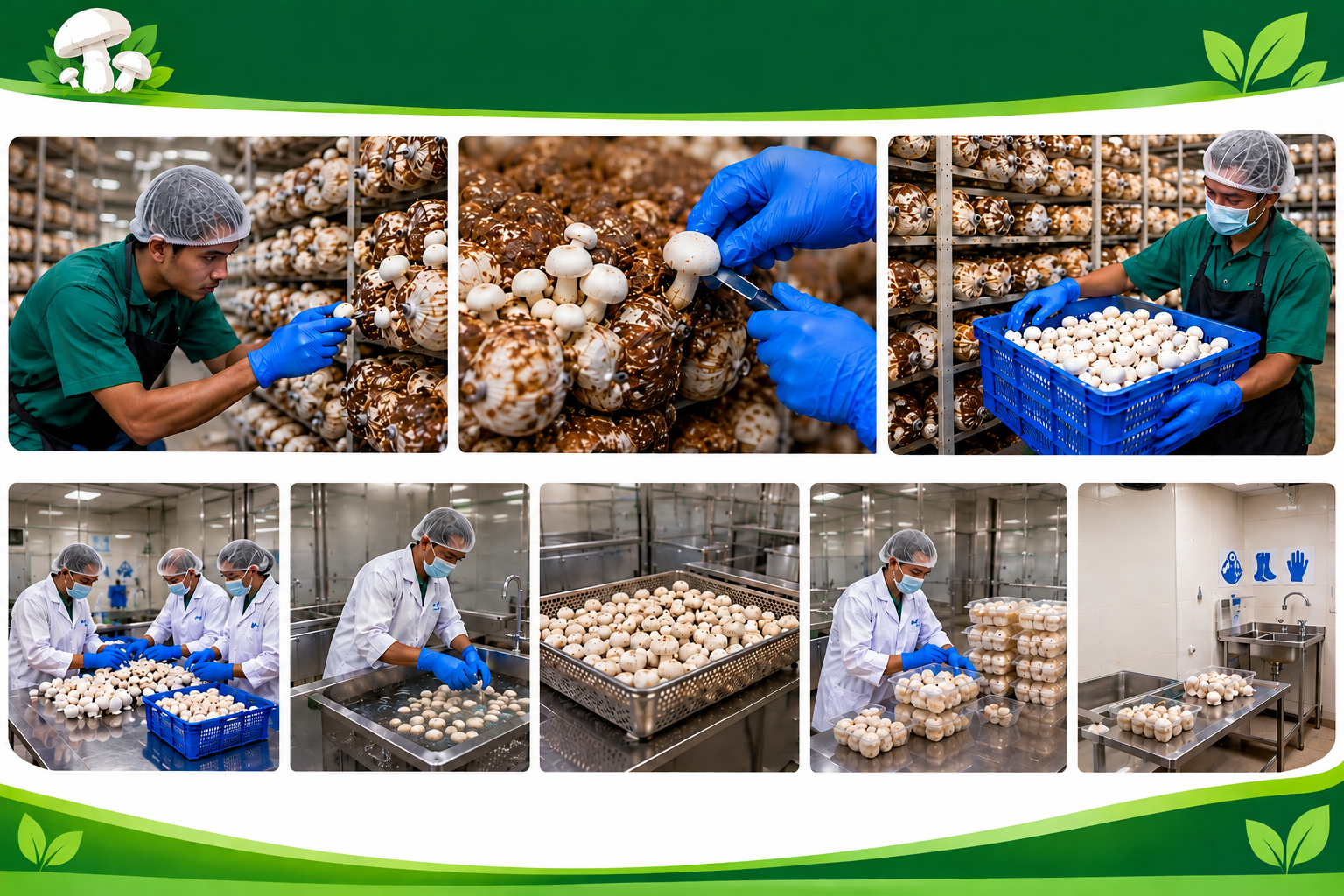
This module describes the skills, knowledge and attitude required to grow
mushroom. It is designed for learners who have successfully completed Certificate
III in Agriculture or its equivalent and pursuing TVET Certificate IV in Agriculture
or any other related qualifications.
Teacher : Valerie UWITONZE
- Teacher: Valerie Uwitonze
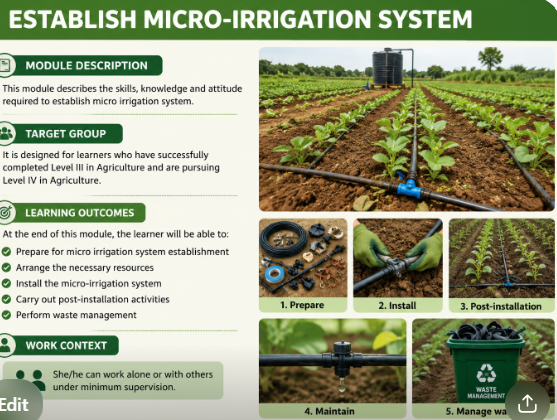
This module equips learners with the skills, knowledge, and attitudes required to establish and manage micro-irrigation systems effectively.
It is designed for learners who have successfully completed Level III in Agriculture and are pursuing Level IV in Agriculture.
Learners will develop competencies in preparing for irrigation system establishment, arranging required resources, and installing micro-irrigation systems.
The module also covers post-installation activities, system maintenance, and proper waste management.
Upon completion, learners will be able to work independently or collaboratively under minimum supervision to establish functional and efficient micro-irrigation systems.
- Teacher: Venant Biziyaremye
- Teacher: Valerie Uwitonze
Introduction of the course
Plant breeding and seed technology are the two arms of crop improvement programmes. The ultimate goal of any plant breeding programme is to make available quality seeds of new improved varieties in adequate quantity to farmers. Modern plant breeding techniques have enabled the development of crop varieties with desired traits at a much higher pace than ever before, addressing the challenges of food and nutritional security. A large number of new crop varieties are being bred continuously to address specific needs viz. productivity, quality, tolerance against abiotic and biotic stresses, cropping intensity, etc. However, to the farmers, all these scientific achievements would be of little use unless they have access to seeds of these varieties, which are genetically pure, physiologically sound (germination, vigour), free from physical impurities and seed-borne diseases. The pace of progress in food production largely depends upon the speed with which a country is able to multiply quality seeds of high-yielding varieties. Hence, the quality seed supply chain must be supported by desired policy and technically sound systems both in national and international domains. In order to achieve this, every country needs a well-established infrastructure for seed production, quality assurance, storage and marketing. Similarly, the regulatory framework for the variety testing, release and notification, and regulation of the seed market are also important to preserve the interests of the farming community. Successful seed production requires establishing variety identity, adherence to maintaining variety purity, and the application of good farming practices along with careful management of crops, following widely accepted production technologies, and quality standards.
- Teacher: Fidele Bucyana