INTRODUCTION
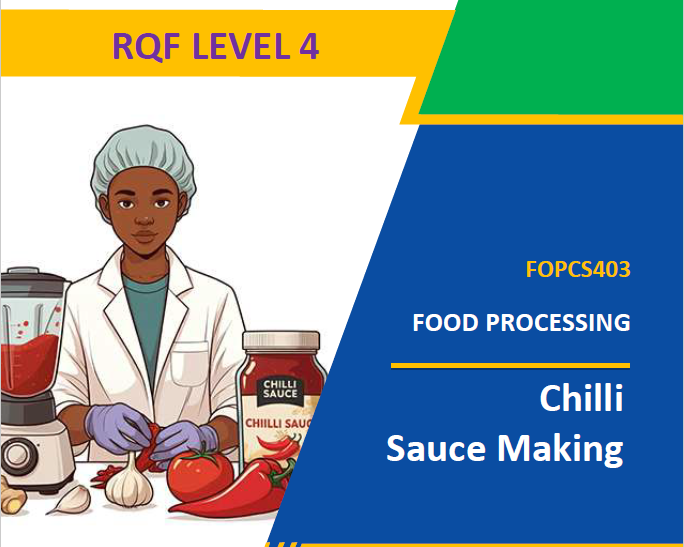
Chili sauce making is a food-processing activity that involves selecting, preparing, processing and preserving fresh chili peppers to produce a spicy liquid or semi-liquid condiment. The process includes sorting, washing, removing unwanted parts, grinding or blending, mixing ingredients, cooking, adjusting flavour, bottling and storing the finished product.
Different ingredients, such as tomatoes, onions, garlic, vinegar, salt, sugar and spices, may be added to improve the taste, texture, colour and shelf life of chili sauce.
Proper processing and hygiene practices are important to ensure that the final product is safe, attractive, flavourful and of good quality. Chili sauce is commonly used as a condiment to improve the taste of different foods.
By the end of this lesson, learners should be able to:
- Define chili sauce making and explain its importance in food processing.
- Identify the tools and equipment used in chili sauce production.
- Identify and select suitable raw materials and ingredients for chili sauce making.
- Explain the importance of personal hygiene and workplace sanitation during chili sauce production.
- Describe the steps involved in preparing fresh chili peppers for processing.
- Demonstrate the procedures for grinding, mixing and cooking chili sauce.
- Apply appropriate methods of seasoning and adjusting the taste and consistency of chili sauce.
- Explain the importance of pasteurization and preservation in chili sauce production.
- Demonstrate proper filling, sealing, labelling and packaging of chili sauce.
- Apply appropriate storage methods to maintain the quality and safety of chili sauce.
- Identify common defects in chili sauce and suggest ways of preventing them.
- Teacher: Jean Pierre Ntezimana