
This course, MATIM501: Industrial Machines Installation and Maintenance, will equip you with the essential skills to install, operate, and maintain industrial machines effectively. We will begin by performing fitting works, which includes preparing the workplace, assembling machine parts, and attaching accessories. Next, you will learn how to operate industrial machines by setting parameters, testing, and controlling production processes. Finally, we will focus on maintaining machines through fault diagnosis, predictive and corrective maintenance, and post maintenance procedures to ensure long term machine efficiency and safety.
Search results: 629
Category: School Based Training
Describe how to get the chicks in poultry farming
Category: Practice On Blended Learning
This module describe the use of ICT tools where the students

- Teacher: JeanBaptiste IRANKUNDA
- Teacher: PERPETUE KANGABO
- Teacher: Marie Chantal MASENGESHO
- Teacher: Emmanuel SIBOMANA
Category: Practice On Blended Learning
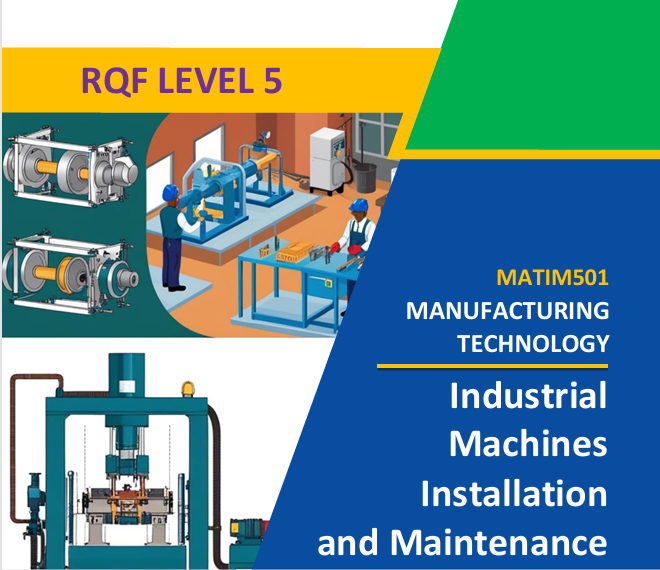
This course provides learners with the knowledge and practical skills required to install, operate, and maintain industrial machines safely and effectively. It covers the fundamental principles of machine installation, alignment, calibration, and commissioning, as well as preventive and corrective maintenance practices. Emphasis is placed on workplace safety, troubleshooting, and the application of industry standards to ensure reliability, efficiency, and longevity of machines used in industrial production.
- Teacher: GASPARD HARERIMANA
Category: L5 MANUFACTURING TECHNOLOGY
This level focuses on the advanced skills and knowledge required to install, commission, maintain, and troubleshoot industrial machinery used in manufacturing environments. It covers mechanical, electrical, and control systems integration, emphasizing safety, efficiency, and compliance with industry standards.
- Teacher: AUGUSTIN MBONIGABA
Category: L5 MANUFACTURING TECHNOLOGY
purpose statement: This module describes the skills, knowledge and attitudes required by a veterinary nurse in treating and preventing infectious diseases. Any veterinary nurse has to treat common infectious diseases during his professional work. So, this competence is very important for the Veterinary nurse training. Upon completion of this module, the trainee will be able to: identify common infectious diseases, Perform diagnosis of common infectious diseases, and Perform treatment of common infectious diseases.

- Teacher: JeandeDieu KUBWIMANA
Category: L4 ANIMAL HEALTH
This module describes the skills, knowledge and attitudes required by a veterinary
nurse in treating and preventing infectious diseases. Any veterinary nurse has to
treat common infectious diseases during his professional work. So, this
competence is very important for the Veterinary nurse training. Upon completion
of this module, the trainee will be able to: identify common infectious diseases,
Perform diagnosis of common infectious diseases, and Perform treatment of
common infectious disease.

- Teacher: NIYONZIMA Fiston
Category: L4 Animal Health
These are interactive manuals developed in partnership with BUKU
- Teacher: Alexander Postma
PURPOSE STATMENT: This module describes the skills, knowledge and attitudes required to treat intoxications, nutritional and metabolic disorders. At the end of this module, participants will be able to identify, diagnose and treat intoxications, nutritional and metabolic disorders during the professional work.
- Teacher: JeandeDieu KUBWIMANA
Category: L4 ANIMAL HEALTH
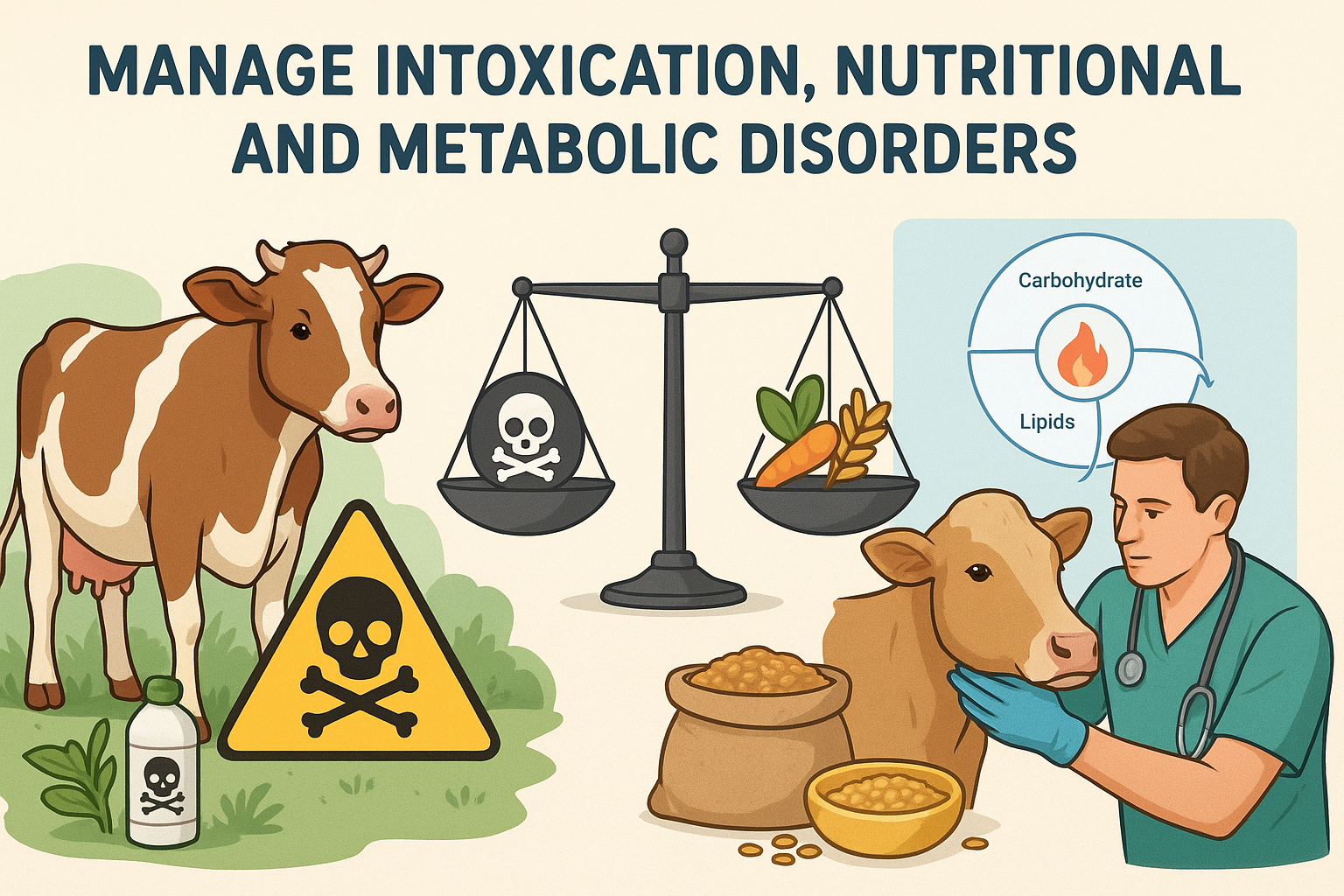
This module describes the skills, knowledge and attitudes required to treat intoxications, nutritional and metabolic disorders.
At the end of this module, you will be able to identify, diagnose and treat intoxications, nutritional and metabolic disorders during the professional work.
- Teacher: Rene Heritier UWURUKUNDO
Category: L4 Animal Health
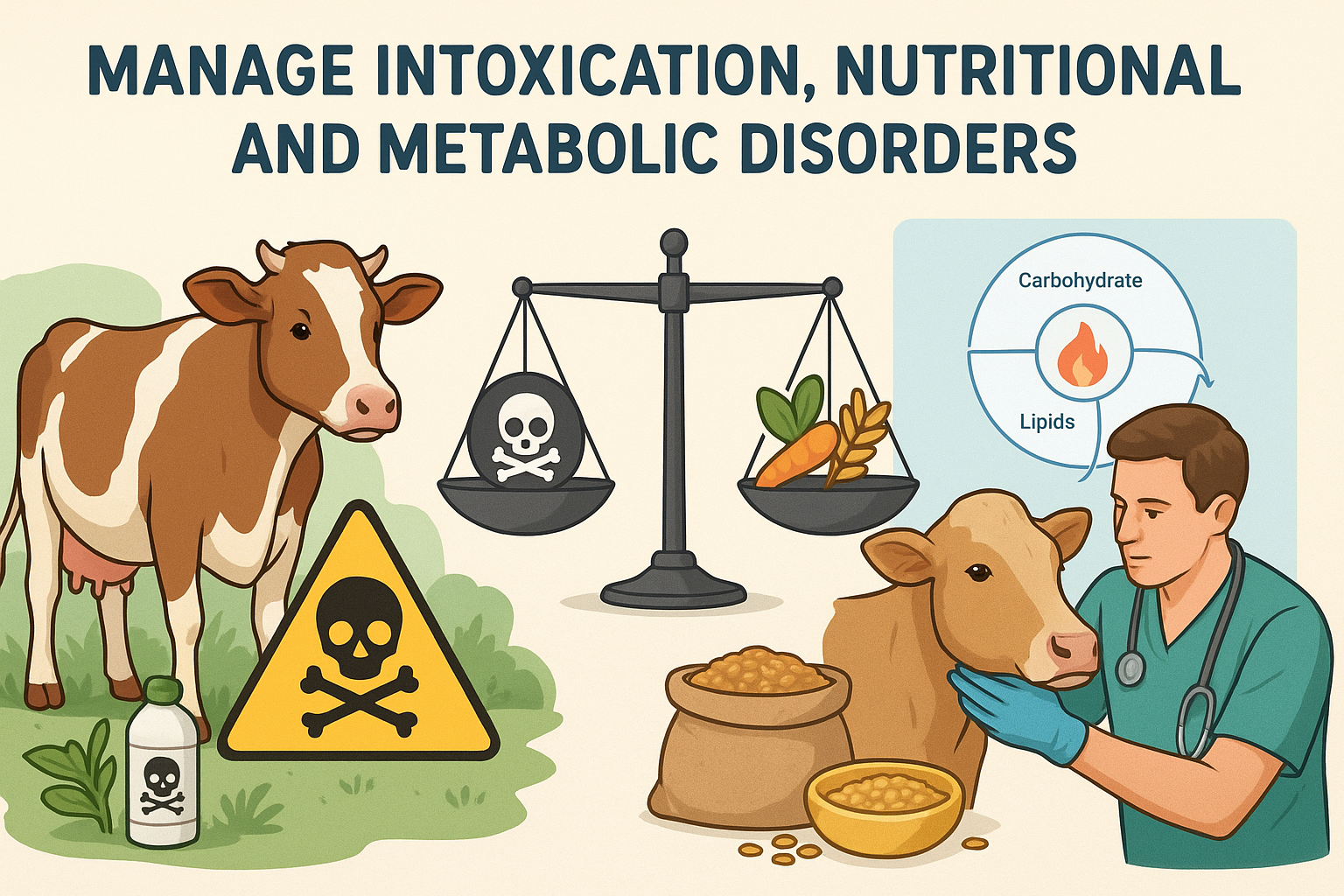
This module describes the skills, knowledge and attitudes required to treat
intoxications, nutritional and metabolic disorders. At the end of this module,
participants will be able to identify, diagnose and treat intoxications, nutritional
and metabolic disorders during the professional work.
It is composed by 3 learning outcomes which are the following:
1) Identify intoxications, nutritional and metabolic disorders
2) Perform diagnosis of intoxications, nutritional and metabolic disorders and finally,
3) Perform treatment of intoxications, nutritional and metabolic disorders
- Teacher: Illuminee BARAKAGWIRA
- Teacher: Olivier MUHOZA
- Teacher: Christine URAYENEZA
Category: Practice On Blended Learning
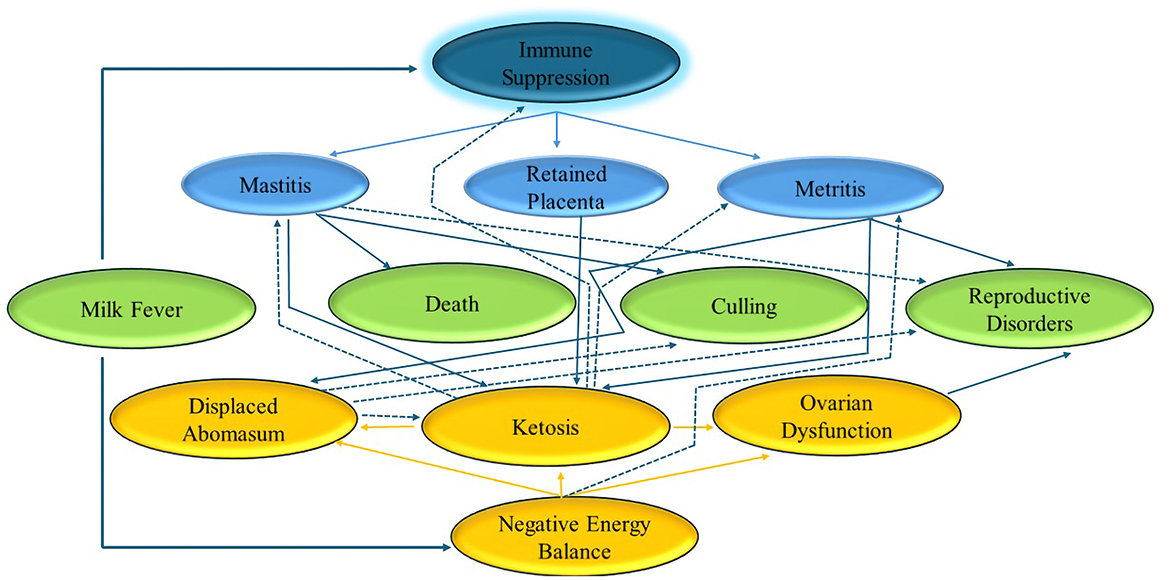
This module describes the skills, knowledge and attitudes required to treat
intoxications, nutritional and metabolic disorders. At the end of this module,
participants will be able to identify, diagnose and treat intoxications, nutritional
and metabolic disorders during the professional work.
Category: Practice On Blended Learning
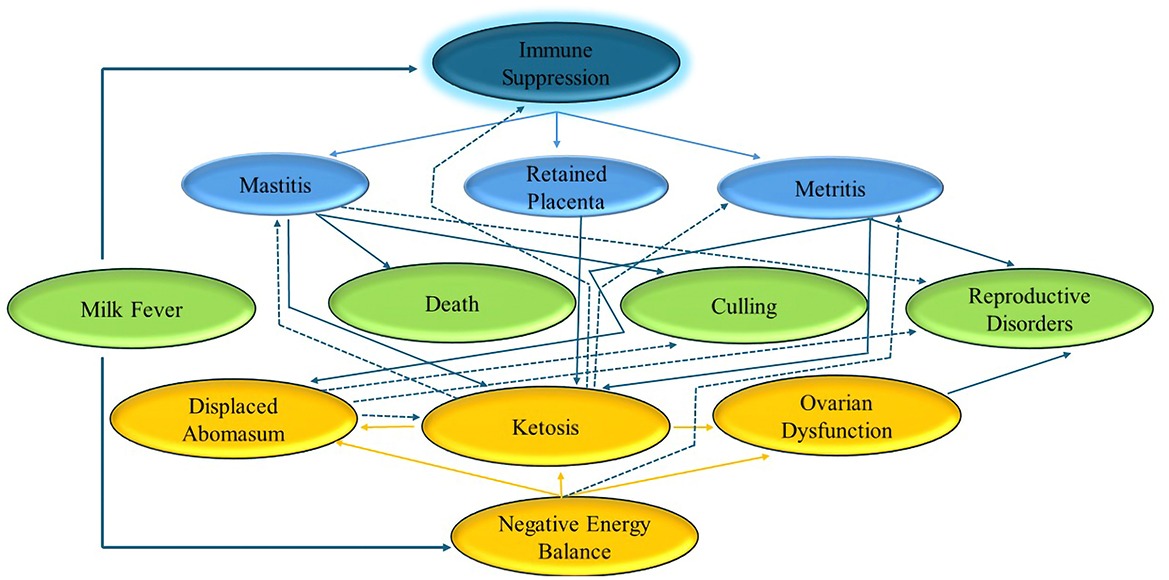
This module describes the skills, knowledge and attitudes required to treat
intoxications, nutritional and metabolic disorders. At the end of this module,
participants will be able to identify, diagnose and treat intoxications, nutritional
and metabolic disorders during the professional work.
Category: Practice On Blended Learning
JavaScript is a lightweight, flexible programming language that plays a central role in making web pages interactive. While it was originally designed to run only in browsers, today it also powers servers through platforms like Node.js.
At its core, JavaScript relies on variables to store and manage data. Developers can declare variables using var, let, or const. Of these, let and const are modern, block-scoped keywords, with const being used for values that should not be reassigned.
The language works with different data types, divided into two categories: primitives and reference types. Primitive values include strings, numbers, booleans, null, undefined, symbols, and big integers. Reference types, on the other hand, cover objects, arrays, and functions.
To manipulate data, JavaScript provides operators. These range from arithmetic operators for calculations, to comparison and logical operators for decision-making. Combining these with control flow structures, such as if...else statements and loops like for or while, allows developers to write logic that adapts to different situations.
Functions are another cornerstone of JavaScript. They let you group code into reusable blocks, which can be defined traditionally with the function keyword or in newer, more concise forms like arrow functions. Alongside this, objects and arrays make it possible to organize data: objects store information as key–value pairs, while arrays hold ordered lists of values.
One of JavaScript’s most powerful features is its ability to interact with the Document Object Model (DOM). Through the DOM, developers can dynamically update a webpage—changing text, styles, or structure in response to events. Events, such as a user clicking a button or pressing a key, can be captured and handled through event listeners, making websites more interactive and engaging.
In recent years, JavaScript has grown even more powerful thanks to modern ES6+ features. These include template literals for easier string formatting, destructuring for extracting values from objects or arrays, and the spread/rest operators for handling collections of data. JavaScript also supports modules, enabling code to be imported and exported across files, and provides asynchronous programming tools such as promises and async/await, which are essential for working with tasks like API calls or file operations.
The module discuss on variables, data types, operators, control flow, functions, objects, arrays, DOM manipulation, events, and modern ES6 feature used for the building blocks of interactive web development.

- Teacher: NDAGIJIMANA Silas
Category: L3 SOFTWARE DEVLOPMENT
This specific module describes the skills required to develop dynamic websites
using JavaScript.

- Teacher: JeanBaptiste IRANKUNDA
- Teacher: PERPETUE KANGABO
- Teacher: Emmanuel SIBOMANA
- Teacher: Speratha TUYISENGE
- Teacher: Leonard TUYISINGIZE
- Teacher: MarieGrace UWURUKUNDO
Category: Practice On Blended Learning
This specific module describes the skills required to develop dynamic websites using JavaScript. Upon completion of this module, the learner will be able to; Apply Javascript Basic Concepts, manipulate data with Javascript and Apply JAVASCRIPT in a web Project.
- Teacher: Wilson NIYONKURU
Category: L3 SOFTWARE DEVELOPMENT
The JavaScript Fundamentals module equips learners with essential skills to design and develop interactive and dynamic websites using JavaScript. Learners will be introduced to JavaScript basic concepts, techniques for manipulating data, and how to apply JavaScript in real-world projects. Through a combination of theory, practice, and project-based learning, learners will build competencies required for software development within the ICT and multimedia sector

- Teacher: PERPETUE KANGABO
Category: L3 SOFTWARE DEVELOPMENT
This specific module describes the skills required to develop dynamic websites
using JavaScript.
- Teacher: JeanBaptiste IRANKUNDA
- Teacher: Marie Chantal MASENGESHO
- Teacher: JULES NTIGURIRWA
- Teacher: Leonard TUYISINGIZE
- Teacher: SadakoSandrine UMUKUNZI
- Teacher: MarieGrace UWURUKUNDO
Category: Practice On Blended Learning