Animal Health E-Lesson: Dehorning Techniques
Sorry, this activity is currently hidden
Section outline
-
-
Did you know that you can improve safety and reduce financial losses by removing the horns of animals?
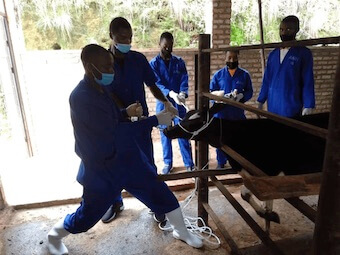
This procedure is called dehorning.
Introduction
Horns are pairs of outgrowth on the heads of cattle, sheep, and goats. Although they function as a form of protection, they can cause serious risks for humans, other animals, and the horned animal itself.
Disbudding and dehorning are common procedures that are performed to remove an animal's horn. In this e-lesson, you will be introduced to the anatomy of a horn and will learn various techniques that will help you perform disbudding and dehorning procedures safely with minimal complications.
Learning Objectives
By the end of this e-lesson, you will be able to:
- Correctly describe the anatomy of a ruminant horn
- Appropriately restrain animals for disbudding and dehorning procedures
- Perform disbudding and dehorning procedures using various techniques
-