Search results: 746
This module describes knowledge, skills and attitude required in the making of decorative objects from proper preparation of tools, materials, equipment and environment. Coherent selection of items in match with the required style for an artistic composition/project that respect rules of composition
- Teacher: Origene IGIRANEZA
This
preliminary/fundamental module describes knowledge, skills and attitude
required in application of making quick drawing/sketch through a keen
observative process and proper use of art elements and principles.

- Teacher: Origene IGIRANEZA
This module is covered first in all qualifications. It allows the learner to get to know the other participants to the training program and to understand himself/herself as part of a team. Also, the trainee will develop a comprehensive and clear vision of the occupation and the training program. The module will allow the participant to avoid mistakes of career guidance and confirm or deny his/her choice from the start. The training and learning methods are presented to the learner. This approach encourages greater motivation and, subsequently, a better integration of various learning.

- Teacher: Origene IGIRANEZA
This module describes the skills, knowledge, and attitude required to apply PHP programming. This module is intended to prepare students pursuing TVET Level 4 in software development. At the end of this module, the students will be able to Apply PHP Fundamentals, Connect PHP to the Database, and Build a Content Management System (CMS) using PHP, Build a web app using MVC Framework (LARAVEL)

- Teacher: Wilson NIYONKURU
This module describes the skills, knowledge, and attitude required to apply PHP programming. This module is intended to prepare students pursuing TVET Level 4 in software development. At the end of this module, the students will be able to Apply PHP Fundamentals, Connect PHP to the Database, and Build a Content Management System (CMS) using PHP, Build a web app using MVC Framework (LARAVEL).

- Teacher: Wilson NIYONKURU
This module describes the skills, knowledge, and attitude required to apply php
programming. This module is intended to prepare students pursuing TVET Level
4 in software development. At the end of this module, the students will be able
to Apply PHP Fundamentals, Connect PHP to the Database, and Build a Content
Management System (CMS) using PHP, Build a web app using MVC Framework
(LARAVEL)

- Teacher: Pacifique DUSABIMANA
This module describes the skills, knowledge, and attitude required to apply PHP
programming. This module is intended to prepare students pursuing TVET Level
4 in software development. At the end of this module, the students will be able
to Apply PHP Fundamentals, Connect PHP to the Database, and Build a Content
Management System (CMS) using PHP, Build a web app using MVC Framework
(LARAVEL)

- Teacher: PERPETUE KANGABO
This module describes the skills, knowledge and attitudes required for a learner to be competent in pig farming. At the end of this module, participants will be able to construct a piggery, rear pigs and control pig diseases under minimum supervision

- Teacher: Patrick NGABONZIZA
Pig farming operations involve the breeding, rearing, and management of pigs for meat (pork) and other by-products. The operations typically include housing and pen construction, feeding and nutrition management, breeding practices, health care and disease control, waste management, and marketing of pigs or pork products. Efficient pig farming focuses on providing proper housing, balanced feeding (concentrates and forages), hygiene, and veterinary care to ensure fast growth, high reproduction rates, and profitability.

- Teacher: Jean Pierre RURANGIRWA
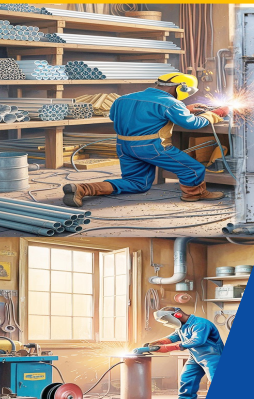
Pipe and pressure vessel welding is a specialized welding process used to join pipes and containers that are designed to hold fluids or gases under pressure. It requires high precision and strict quality standards to ensure strength, leak-proof joints, and safety under operating conditions.

- Teacher: Paulin NIYIGABA
Pipes
- Purpose: Transport fluids (liquids, gases, slurries) under pressure or flow.
- Materials: Steel, copper, PVC, HDPE, etc.
- Standards: ASME B31.1 (Power piping), B31.3 (Process piping), etc.
- Components:
- Pipes
- Fittings (elbows, tees, reducers)
- Valves
- Flanges and gaskets
- Design Considerations:
- Pressure and temperature
- Flow rate
- Material compatibility
- Corrosion resistance
Pressure Vessels
- Purpose: Hold gases or liquids at a pressure substantially different from ambient pressure.
- Common Uses:
- Boilers
- Heat exchangers
- Reactors
- Storage tanks
- Materials: Carbon steel, stainless steel, composites
- Design Codes: ASME Section VIII (Boiler and Pressure Vessel Code)
- Key Parts:
- Shell
- Heads (end caps)
- Nozzles
- Supports (saddles, skirts)
- Safety Features:
- Pressure relief valves
- Burst discs
- Inspection ports

- Teacher: ALBERT IMANIRAFASHA
This course, "Pipes and Pressure Vessels Welding," provides comprehensive training on organizing the workplace, preparing workpieces, and assembling pipes and pressure vessels. Learners will first gain essential knowledge in setting up a safe and efficient work environment, including preparing tools, materials, and welding equipment such as MIG/MAG, TIG, and FCAW. The course then focuses on cutting, edge preparation, and forming workpieces. Finally, it covers the assembly process, product finishing, and quality testing. Each learning outcome includes detailed competencies, practical content, and end assessments to ensure skill development and application.

- Teacher: |GIRINSHUTI Fabrice
This course equips learners with the knowledge and practical skills required to carry out welding on pipes and pressure vessels in accordance with industry standards and safety regulations. It covers the preparation of materials, selection of appropriate welding processes (such as SMAW, GTAW, and GMAW), setting of welding parameters, joint design, and defect prevention. Emphasis is placed on welding safety, handling of pressurized systems, and adherence to quality assurance procedures.
Inclusive methods such as demonstrations, guided practice, simulations, group projects, and blended learning are applied to ensure that all learners actively participate and develop confidence. Upon completion, learners will be able to perform high-quality welds on pipes and pressure vessels, interpret welding specifications, and ensure structural integrity and reliability in various industrial applications such as oil and gas, power plants, and manufacturing.

- Teacher: Jeremie NGIZWENAYO
This is a core module which describes the skills, knowledge and attitude to be acquired by the learner to perform good work by preparing the working area and applying different coats in plastering in order to provide protection and good appearance of the wall at construction site and remove defects which may appear on the plastered walls. The learner deemed competent to this module may work at construction site in finishing stages under minimum supervision.
- Teacher: Marie Chantal MUKANEZA