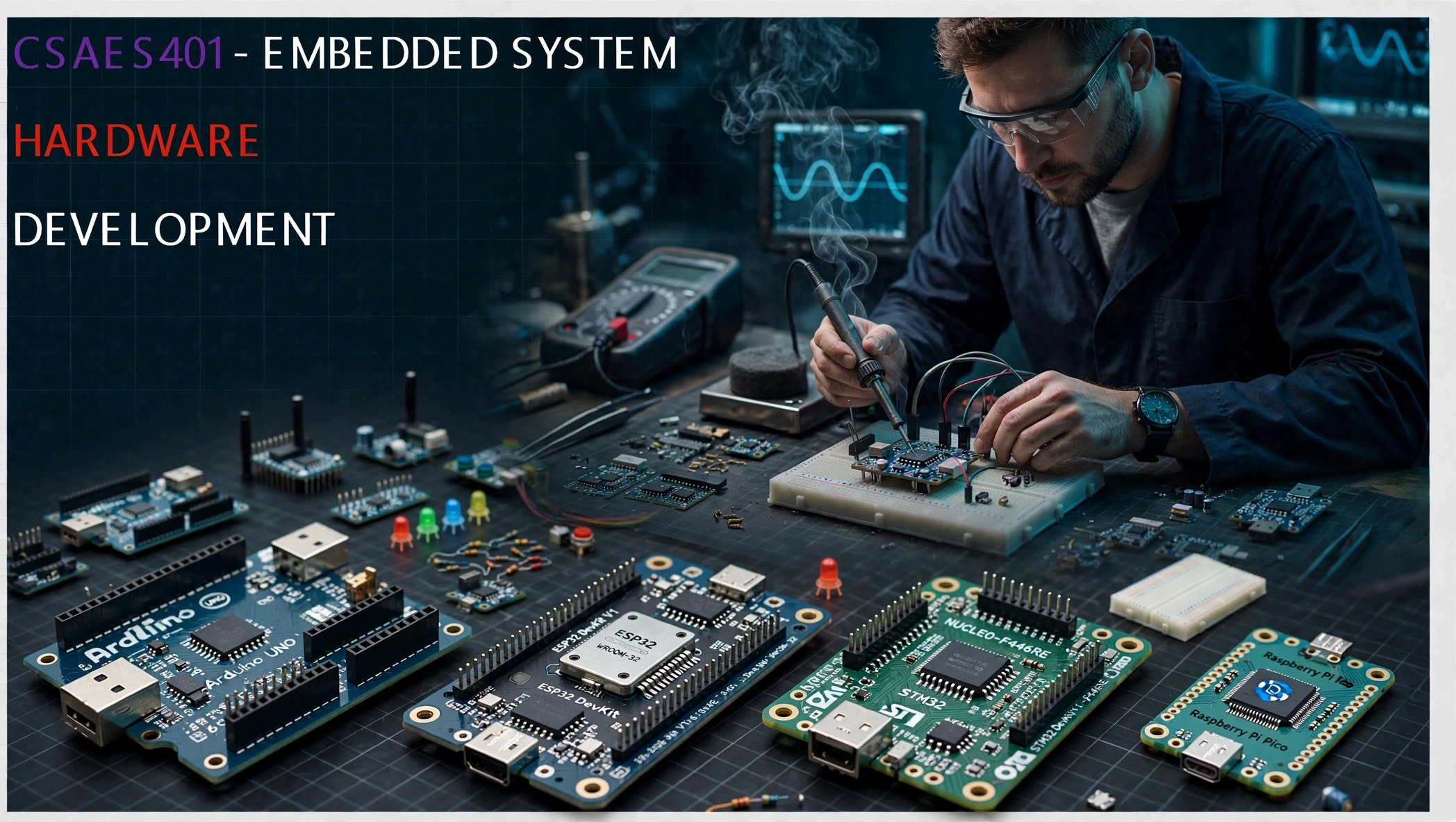
EMBEDDED SYSTEM HARDWARE DEVELOPMENT
From requirements and hardware construction to testing and system integration
📘 About This Module
This module provides learners with the knowledge, skills, and attitudes required to develop, build, test, troubleshoot, and integrate embedded system hardware used in modern electronic and computer-based systems.
The module combines theory with practical activities to help learners understand how embedded hardware is designed and implemented. Learners will work with microcontrollers, sensors, actuators, communication interfaces, power supply circuits, electronic components, and embedded-system development tools.
🎯 What You Will Develop
Workplace Preparation
Prepare a safe, clean, organized, and suitable workplace for embedded hardware development activities.
Requirements Identification
Identify application requirements, components, tools, equipment, and resources needed for an embedded system.
Hardware Construction
Assemble and construct embedded hardware using electronic components, microcontrollers, sensors, actuators, and interface circuits.
Testing & Troubleshooting
Test circuits, identify faults, troubleshoot hardware problems, and verify that the system operates according to specifications.
⚙️ Key Technologies & Practical Areas
🦺 Safety & Environmental Responsibility
Throughout the module, learners are expected to observe occupational health and safety (OHS) requirements, proper handling of electronic equipment, electrical safety, electrostatic discharge (ESD) protection, responsible use of tools, and environmentally responsible disposal of electronic waste.
Remember: A successful embedded-system technician does not only make a circuit work — they also work safely, systematically, and responsibly.
Your Practical Goal
By the end of this module, you should be able to move from an embedded-system requirement to a working hardware solution: identify → design → assemble → program → test → troubleshoot → integrate.
- Teacher: Gilbert Nahumunsi