
Search results: 215
This module describes the knowledge, skills, and attitude to be acquired in order to place well tiles on the walls, stairs and floors. It is intended to be pursued you at TVET level IV Building Construction. At the end of this module, you will be able to prepare working area, select materials, tools and equipment. you will also be able to cut, apply tiles, and perform grouting and cleaning of the workplace.

- Teacher: MUKANSANGA PASCALINE
This course provides a comprehensive understanding of tile works, covering the principles, techniques, and best practices involved in the installation and maintenance of various types of tiles. Participants will learn about different tile materials, tools, and methods, ensuring they can effectively plan, execute, and troubleshoot tile projects in both residential and commercial settings.

- Teacher: INNOCENT MUHAWENIMANA
This module describes the knowledge, skills, and attitude to be acquired in order to place
well tiles on the walls, stairs and floors. It is intended to be pursued by learner at TVET
level IV Building Construction. At the end of this module, the learner will be able to
prepare working area, select materials, tools and equipment. He/She will also be able to
cut, apply tiles, and perform grouting and cleaning of the workplace.

- Teacher: Alexis NDIKUBWIMANA
This module describes the knowledge, skills, and attitude to be acquired in order to place
well tiles on the walls, stairs and floors. It is intended to be pursued by learner at TVET
level IV Building Construction. At the end of this module, the learner will be able to
prepare working area, select materials, tools and equipment. He/She will also be able to
cut, apply tiles, and perform grouting and cleaning of the workplace.

- Teacher: Onesphore MUHIRE
This specific module describes the skills required to apply version control during software development in a team.
Upon completion of this module, the learner will be able to: Setup repository, Manipulate files, Ship codes.
- Teacher: Wilson NIYONKURU
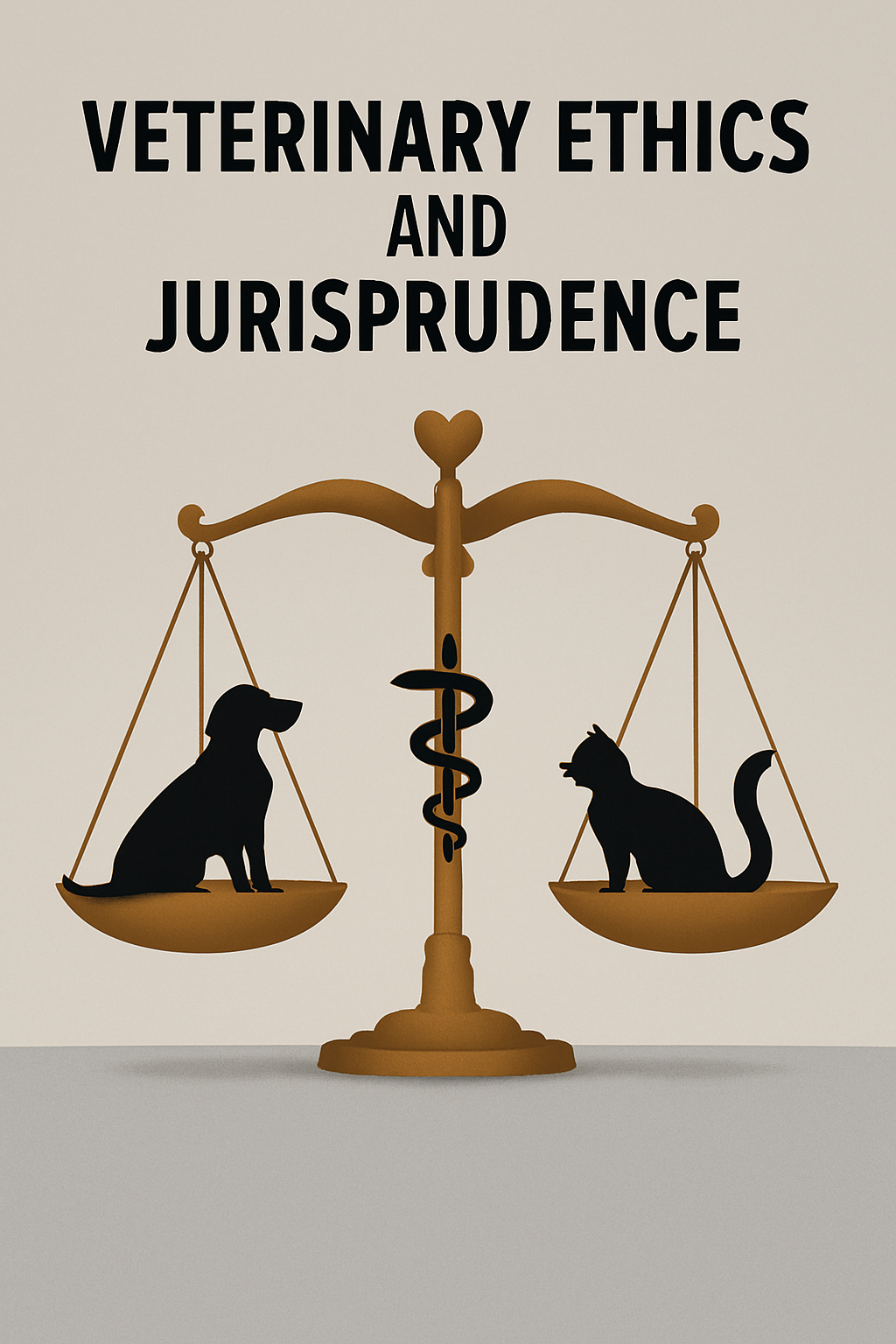
This module describes the skills and knowledge required to apply veterinary ethics and Jurisprudence .
The module of veterinary ethics and jurisprudence can include a wide range of topics, from the fundamental principles that guide veterinary practice to the specific laws and regulations that govern the profession.
This module ensure veterinarians understand their professional responsibilities, uphold high standards of care, and navigate the legal landscape effectively.

This module describes the skills and knowledge required to apply veterinary
ethics and jurisprudence. Upon completion of this module the trainee will be able
to apply animal welfare principles, apply veterinary ethics and comply with laws
and regulations of veterinary profession
- Teacher: INGABIRE Veronique
This course, Veterinary Ethics and Jurisprudence, equips learners with the essential knowledge, skills, and professional attitudes needed to uphold animal welfare, apply ethical principles, and comply with the legal and regulatory framework governing veterinary practice.
Through a blend of theoretical instruction and hands-on practical work, trainees will explore core concepts such as the five animal freedoms, humane handling and slaughter, professional ethics, stakeholder communication, and ethical decision-making processes.
The course also covers key Rwandan veterinary laws, ministerial orders, and legal interpretation methods. Upon completion,
learners will be able to apply animal welfare principles in practice, demonstrate ethical behavior in professional settings, and ensure full compliance with relevant veterinary legislation.

- Teacher: ALEXIE MUMUKUNDE
This module equips learners with practical skills to administer and manage Windows Server environments. It focuses on three key outcomes:
1. Manage Server Services
- Students learn how to install, configure, and monitor core server services such as DNS, DHCP, and File/Print services
- Emphasis is placed on starting, stopping, and troubleshooting services to ensure availability and performance.
2. Manage Users
Learners practice creating and managing user accounts, groups, and organizational units using Active Directory.
-
They explore permission assignment, password policies, and access control to secure resources and maintain user productivity.
3. Deploy Web Applications
Students are introduced to Internet Information Services (IIS) for hosting and deploying web applications.
-
They configure websites, virtual directories, and application pools, ensuring applications run securely and efficiently on the server.

- Teacher: UMUGWANEZA Marie Aimée

This course introduces to you the principles of drug selection, identification and storing. You will explore how to effectively identify drug forms and names, including drug selection based on their therapeutic and systemic function. The unit highlights different types of drug names and forms. You will also learn how to arrange and store appropriately veterinary drugs.

PURPOSE STATEMENT:
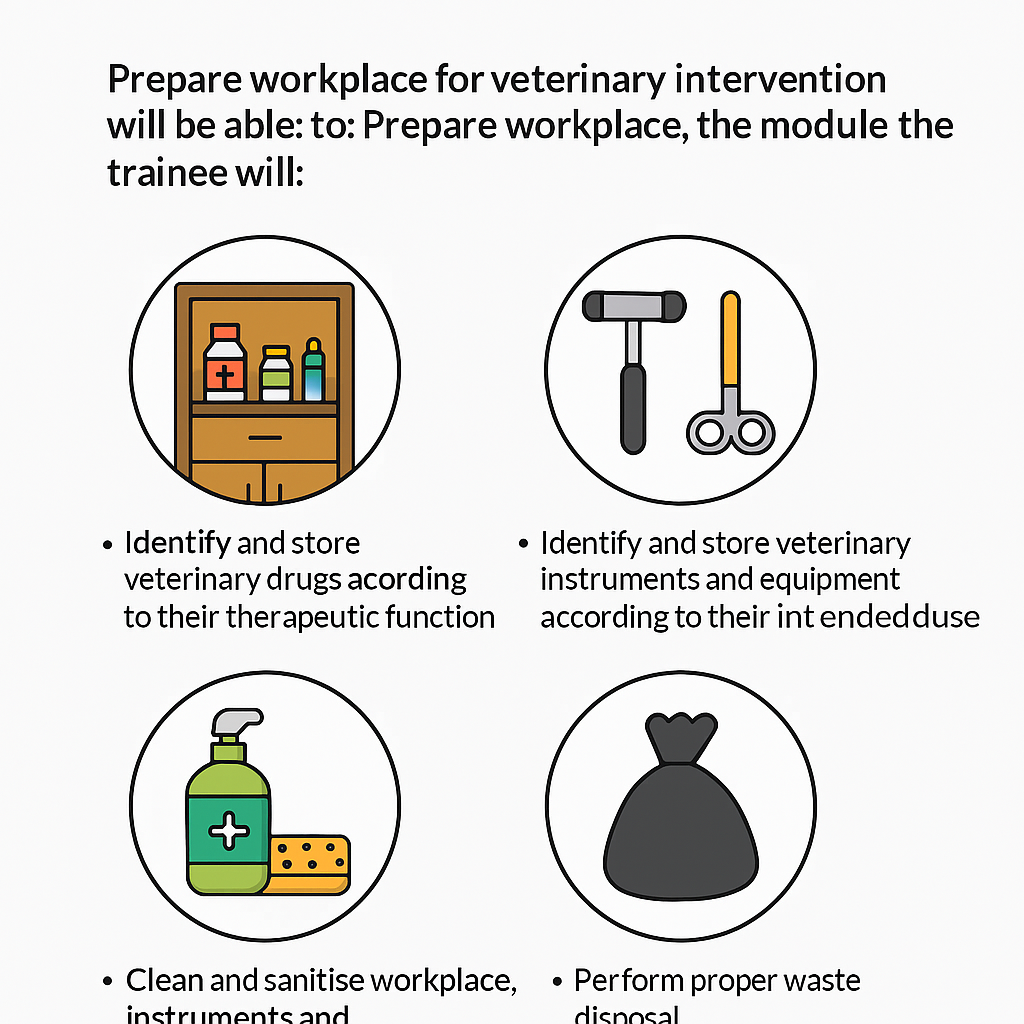
This module covers the knowledge, skills and attitudes required to prepare
workplace for veterinary intervention. Indeed, any veterinary activity involves a
proper preparation of workplace. So this competence is very important for the
Animal care technician training and it is a prerequisite for all the specific
modules of the qualification involving the manipulation and treatment of the
different animal species. It is intended for learners who have successfully
completed ordinary level, level II in animal health or its equivalent and pursuing
TVET level III and related qualification. Upon completion of this module, the
trainee will be able to: Identify and store veterinary drugs according to their
therapeutic function; Identify and store veterinary instruments and equipment
according to their intended use; Clean and sanitise workplace, instruments and
equipment; Perform proper waste disposal
- Teacher: Gilbert NZABANTERURA
This outcome introduces to you the principles of drug selection, identification and storing. You will explore how to effectively identify drug forms and names, including drug selection based on their therapeutic and systemic function. The unit highlights different types of drug names and forms. You will also learn how to arrange and store appropriately veterinary drugs.

- Teacher: Illuminee BARAKAGWIRA
- Teacher: Christine URAYENEZA
This Learning Outcome introduces to you the principles of drug selection, identification and storing. You will explore how to effectively identify drug forms and names, including drug selection based on their therapeutic and systemic function. The unit highlights different types of drug names and forms. You will also learn how to arrange and store appropriately veterinary drugs.

- Teacher: Illuminee BARAKAGWIRA
- Teacher: JeanDamascene BIMENYIMANA
- Teacher: Olivier MUHOZA
- Teacher: Wilson NIYONKURU