
Content/ topic1 Cleaning of exhaust components
Content/ topic1 Cleaning of exhaust components
- Exhaust manifold
Using a lacquer thinner, soak the interior of the manifold. Using steel wool and a wire brush, scrub the manifold exterior, paying special attention to coated spots. Wipe the entire manifold with the lacquer, let it sit for a while. After the manifold has been cleaned, you simply need to reattach it to the engine
- Lambda sensor
A faulty oxygen sensor leads to engine to stutter and consequently fuel consumption to increase. This information is misleading as oxygen sensors are designed for replacement, not cleaning. No car manufacturer supports cleaning.
- Catalytic converter
1. Get Oxicat Catalytic converter cleaner
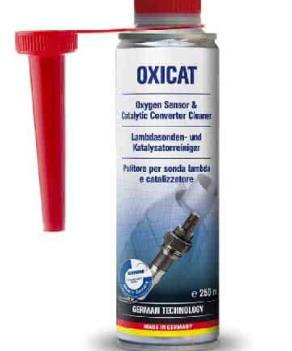
The product that you can use is the OXICAT – Oxygen Sensor & Catalytic Converter Cleaner. You tap it into your fuel tank, and it does not matter if you have a petrol, diesel or hybrid car
2. Pour the Catalytic converter cleaner into the fuel tank.

Tap this into the tank with the required amount from the manual. Make sure that you are using the required amount for your car type and engine so you are not using too much of the product this can cause even more damages to your catalytic converter
3. Take your car for a drive
Drive your car a couple of miles to see if your car runs better than before. You can also try to drive your car at high RPM’s over 3000 for a long distance to get the catalytic converter really hot to burn out the clog inside it. Remember to check that there is no oil or other fluids in your catalytic converter that could ignite it.