Search results: 629
This module describes the skills, knowledge and attitudes required to construct poultry house, apply poultry rearing techniques and control poultry diseases

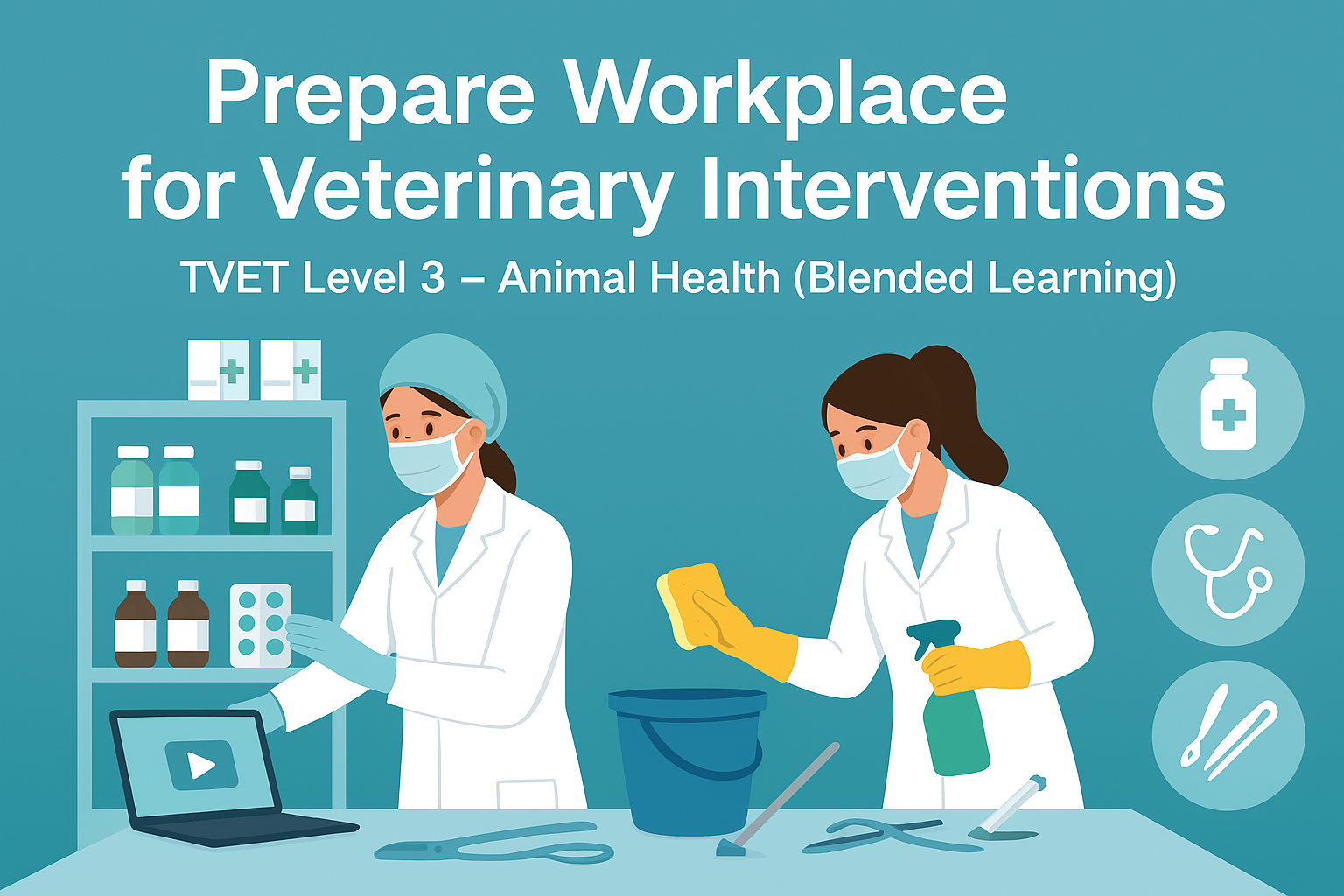
This module covers the knowledge, skills and attitudes required to prepare workplace for veterinary intervention. Indeed, any veterinary activity involves a proper preparation of workplace.
So, this competence is very important for the Animal care technician training, and it is a prerequisite for all the specific modules of the qualification involving the manipulation and treatment of the different animal species. It is intended for learners who have successfully completed ordinary level, level II in animal health or its equivalent and pursuing TVET level III and related qualification.
Upon completion of this module, you will be able to:
Identify and store veterinary drugs according to their therapeutic function; Identify and store veterinary instruments and equipment according to their intended use; Clean and sanitise workplace, instruments and equipment and perform proper waste disposal.
- Teacher: Rene Heritier UWURUKUNDO
This module covers the knowledge, skills and attitudes required to prevent diseases for the following species:
cow, sheep, goat, pig, poultry, rabbit, dog and cat. The workplace in which this competence may be applied
range from veterinary clinics, animal housings/shelters, farms, customs services to slaughterhouses. It’s a
prerequisite for all the specific modules of the qualification involving the manipulation and treatment of the
different species mentioned above. Upon completion of this module, the trainee will be able to: Monitor
physical conditions of animal housing; Restrain animals for veterinary intervention; Perform animal general
examination; Use antiparasitic drugs for disease prevention.

- Teacher: INGABIRE Veronique
Mechanical machines are devices that use physical components like gears, levers, and
pulleys to transform manual inputs into useful work.

- Teacher: Paulin NIYIGABA
Purpose statement
This is a core module which describes the skills, knowledge and attitudes to be acquired
by the learner to produce good soil- based bricks/blocks. The learner should prepare the
materials, making good mix, molding and burn soil-based brick /blocks in order to
produce bricks or blocks of good quality. The learner deemed competent to this module
may work in construction materials production under minimum supervision.
- Teacher: Jean Damascene TUYAMBAZE
This module, "Production of Soil-Based Bricks and Blocks," is designed to provide you with the practical knowledge and skills required to manufacture high-quality, durable, and sustainable soil-based building materials.
This module will guide you through the entire production process, from raw material selection to the final curing of the bricks. You will learn the scientific principles behind soil stabilization and compaction, and gain hands-on knowledge of the tools and techniques used in both manual and mechanized production.
- Teacher: Speratha MUKAMUHIRE
This is a core module
which describes the skills, knowledge and attitudes to be acquired by the
learner to produce good soil- based bricks/blocks. The learner should prepare
the materials, making good mix, molding and burn soil-based brick /blocks in order to produce bricks or blocks of
good quality. The learner deemed competent to this module may work in
construction materials production under minimum supervision.

- Teacher: Eriphase KUNDABAKE
This is a core module which describes the skills, knowledge and attitudes to be acquired
by the learner to produce good soil- based bricks/blocks. The learner should prepare the
materials, making good mix, molding and burn soil-based brick /blocks in order to
produce bricks or blocks of good quality. The learner deemed competent to this module
may work in construction materials production under minimum supervision.
- Teacher: Marie Chantal KAYITESI
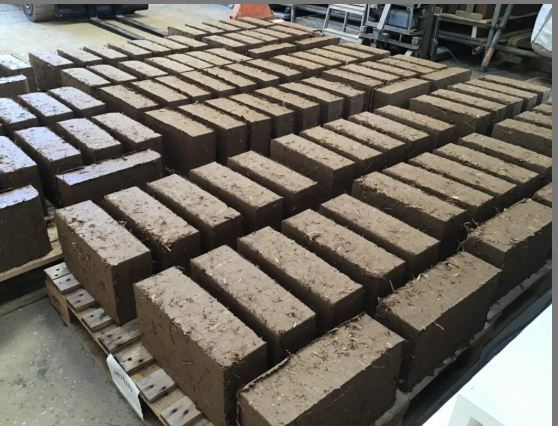
The course “Production of Soil-Based Bricks and Blocks” trains learners to produce soil-based bricks and blocks used in building works. It covers preparing soil, selecting suitable materials, mixing and molding, curing, and storing the products. Learners also gain practical skills in using hand tools and machines safely, ensuring quality standards, and working efficiently on construction sites. By the end of the course, trainees are able to make strong and durable bricks and blocks that can be used for walls and other building structures.
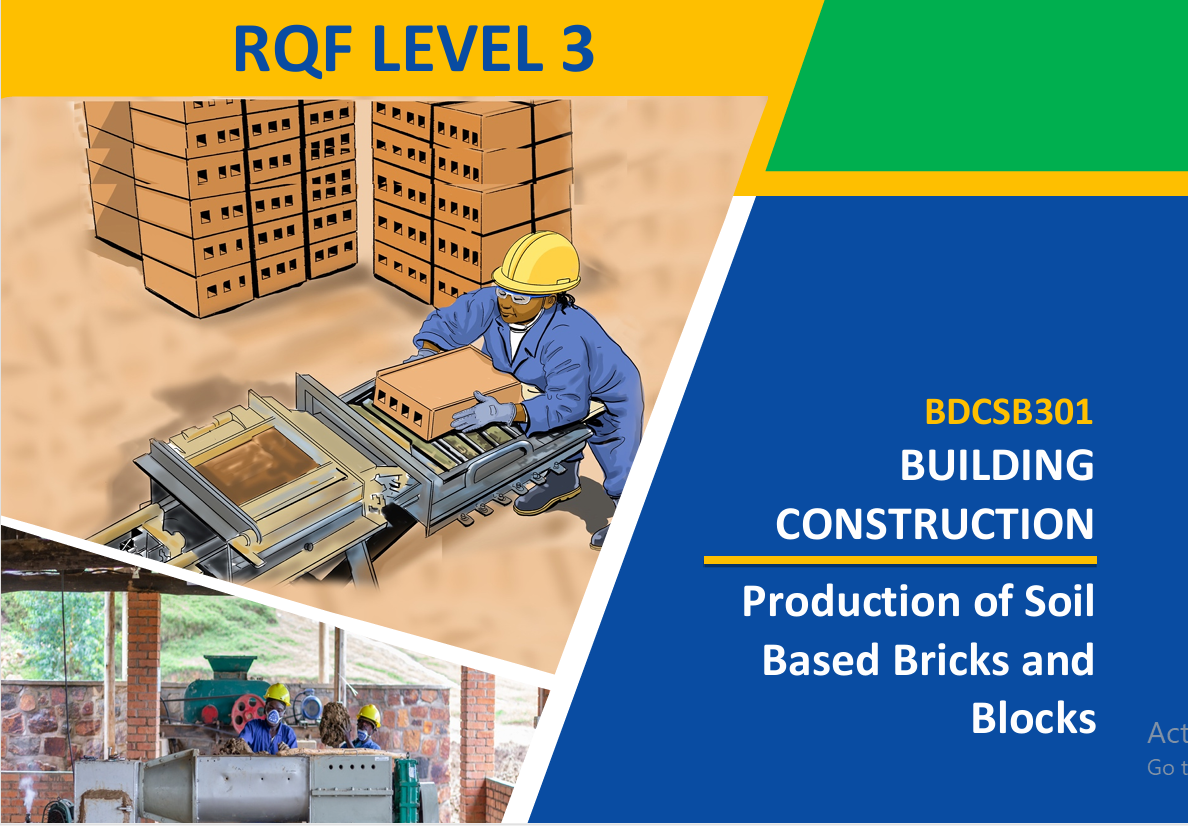
This
is a core module which describes the skills, knowledge and attitudes to be
acquired by the learner to produce good soil- based bricks/blocks. The learner
should prepare the materials, making good mix, molding and burn soil-based brick /blocks in order to produce
bricks or blocks of good quality. The learner deemed competent to this module
may work in construction materials production under minimum supervision
- Teacher: Celestin NSABIMANA
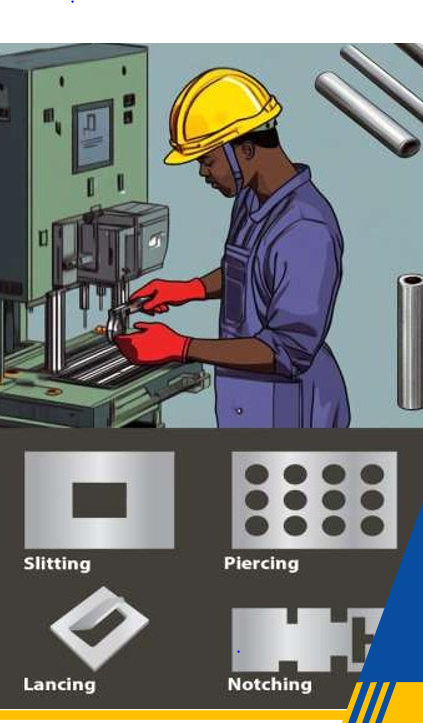
Punching operation is a type of press working process used in manufacturing where a tool (punch) is forced through sheet metal to remove a slug of material, creating a hole.
🔹 Purpose:
To create holes or cut-outs in sheet metal using a punch and die setup.
🔹 Basic Principle:
- A punch presses the sheet metal against a die.
- The punch shears the material and removes a portion (called a slug).
- The remaining material has a clean hole or profile.
🔹 Key Components:
- Punch – the tool that moves downward to cut the material.
- Die – supports the material and defines the shape of the hole.
- Sheet metal – the workpiece.
🔹 Types of Punching Operations:
- Blanking – the cut-out piece is the desired part.
- Piercing – the hole is the desired feature.
- Nibbling – series of small punches to make complex shapes.
- Perforating – punching multiple holes.
🔹 Applications:
- Automotive panels
- Electronic enclosures
- Metal brackets
- Kitchen appliances
🔹 Advantages:
- Fast and efficient
- High repeatability
- Cost-effective for large volumes
- Teacher: ALBERT IMANIRAFASHA
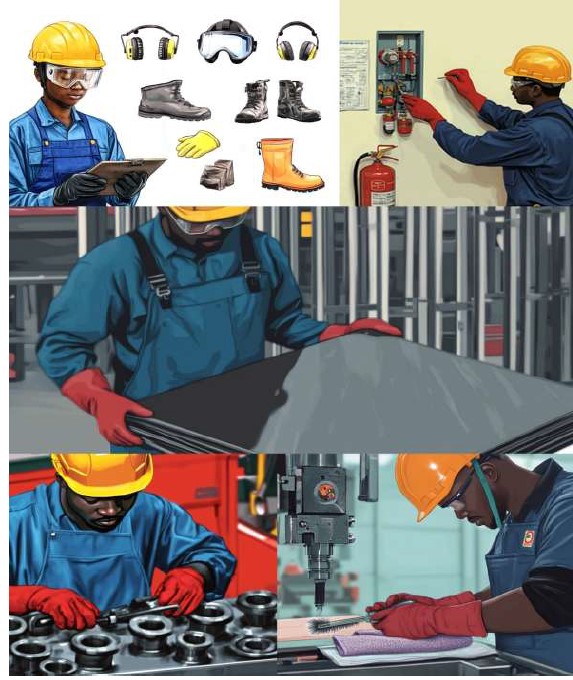
Punching is a metal cutting process used to create holes or shapes in a sheet of metal by using a punch and die. The punch presses the material into the die with high force, causing the sheared portion (slug) to separate from the sheet.
It is a fast and precise process commonly used in sheet metal fabrication to make holes, slots, or other cutouts for manufacturing parts. Punching offers high production speed, accuracy, and low cost for large-scale production.
- Teacher: NIYITEGEKA Patrick
This
module describes the skills, knowledge and attitudes required to perform the
construction of drainage structures. It is intended for learners who have
successfully completed ordinary level and pursuing level 3 in Public Works or
applying for recognition of prior learning or other related qualifications.
At the end of this module, learners will be able to prepare the work, excavate the trench, construct drainage system structures and apply erosion control methods. Qualified learners deemed competent to this competency shall have the ability to take responsibility for the carrying out of a range of defined activities in Public Works under non- directive supervision.

- Teacher: Origene IGIRANEZA
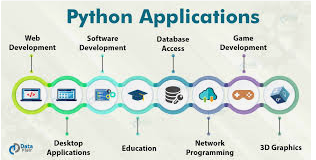
This specific module describes the skills, knowledge and attitude required to Apply Python Programming. This module is intended to prepare learners pursuing TVET Level 5 in software development. Upon completion of this module, the learner will be able to Prepare python environment, write basic python program and Apply object-driven in python.

- Teacher: JACQUELINE NIRERE
This specific module describes the skills, knowledge and attitude required to Apply
Python Programming. This module is intended to prepare learners pursuing TVET
Level 5 in software development. Upon completion of this module, the learner will be
able to Prepare python environment, write basic python program and Apply objectdriven in python.
- Teacher: Vincent NSANZIMANA
This general module aims to equip learners with knowledge and skills necessary for applying Quality Assurance. This module is intended to prepare students pursuing TVET Level 5 in software development. Upon completion of this module, learners will be able to analyse system requirements specification, develop test plans, test the system and generate test documentation.
- Teacher: Wilson NIYONKURU
This module introduces learners to the
principles and practices of software quality assurance, focusing on developing
the skills needed to ensure that applications meet user requirements and
function as expected.